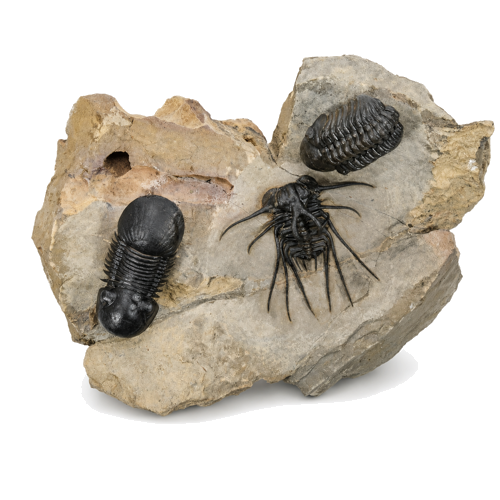
About the item: An authentic composition of fossils representing three different genera of extinct marine arthropods – trilobites – on a single matrix, hailing from the Early Devonian period. This exceptional, completely natural, top-tier specimen from the Lhandar Formation of Morocco brings together three unique morphological forms: Dicranurus monstrosus, Reedops, and Paralejurus. It is an extremely rare and highly sought-after collectible, demonstrating the diversity of Paleozoic era seafloor life within a single rock agglomerate.
Technical information:
Origin: Lhandar Formation, Morocco.
Geological system: Paleozoic.
Period / Epoch: Early Devonian (approximately 419.2–393.3 million years ago).
Condition: Natural.
Scientific names: Dicranurus monstrosus, Reedops, Paralejurus.
Width of the main trilobite (Dicranurus): 8 cm.
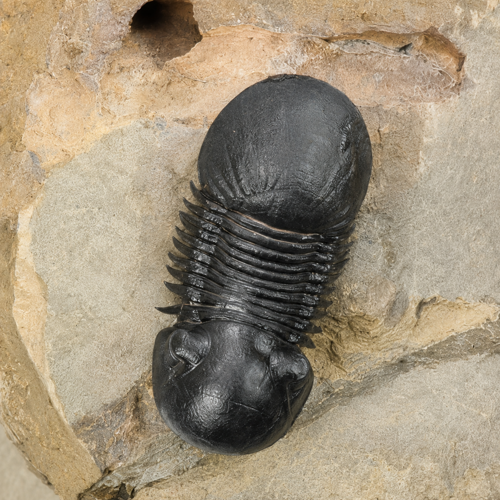
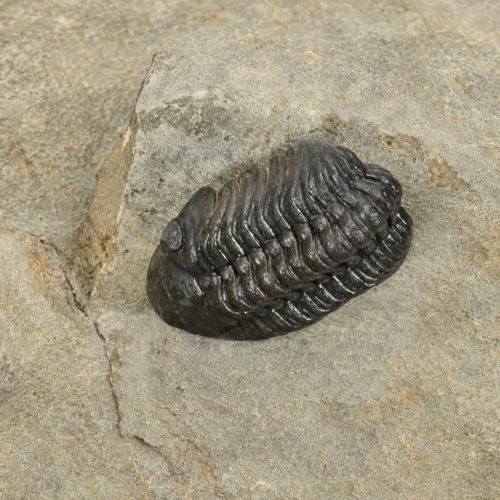
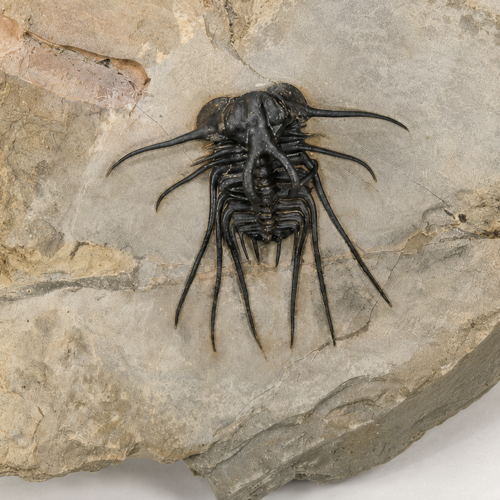
Structural and analytical breakdown: This unique rock slab features a flawless composition of three distinct individuals rising above a light-colored sedimentary matrix. The central and most spectacular part of the specimen is the exotic-looking, spinose Dicranurus monstrosus, reaching a substantial width of 8 cm. It underwent top-level, precise paleontological preparation during which the animal's powerful, characteristic horns and spines were completely freed from the rock, creating a three-dimensional, free-standing relief. Next to the central individual, on the very same base, two other beautifully preserved trilobites are naturally positioned: the streamlined, smooth-contoured Paralejurus and the segmented Reedops. The deep, dark natural color of all three carapaces creates a perfect aesthetic contrast with the sandy texture of the rock.
Historical and geographical context: During the Early Devonian period, approximately 400 million years ago, shallow, mineral-rich marine basins covered the territory of present-day Morocco, serving as an arena for intense evolutionary warfare. The development of the Dicranurus genus was a direct response to the emergence of predators – their impressive, hypertrophied spines and occipital horns functioned as a defense mechanism and helped distribute weight over the soft bottom mud. Meanwhile, Paralejurus and Reedops occupied alternative ecological niches, characterized by distinct locomotion and feeding habits. The rocks of the Lhandar Formation are world-renowned for allowing the preparation of such fragile, spinose structures without disrupting their original positioning.
Collectible and investment value: The market value of this trilobite association is defined by several key aspects. First and foremost is the co-occurrence of multiple genera within a single, original matrix – such natural associations are incomparably rarer and more valuable than isolated, single rock fragments. Furthermore, the complexity of preparing the Dicranurus is of critical importance, as cleaning thin, free-standing spines under a microscope requires exceptional craftsmanship and hundreds of hours of labor, which directly cements the elite status of the exhibit. The value is enhanced by the flawless preservation level without any modern restorations, as well as its reliable, scientifically recognized provenance. Finally, the object features museum-grade representativeness, ensuring it will become an undeniable centerpiece in high-end fossil collections, a prestigious scientific display, or a luxurious interior accent. This roughly 400-million-year-old alliance of three prehistoric creatures is an authentic document of Paleozoic nature, harmoniously blending extraordinary spinose beauty, geological uniqueness, and premium collectible value.