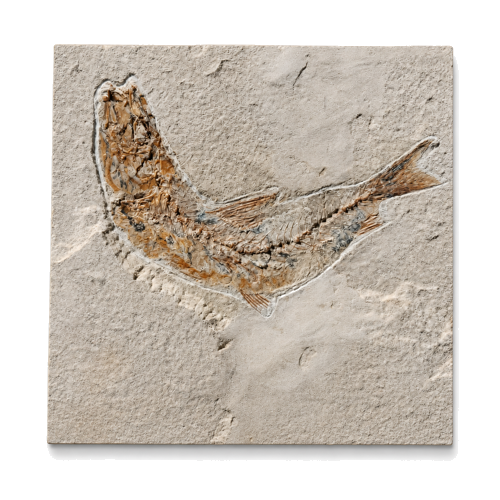
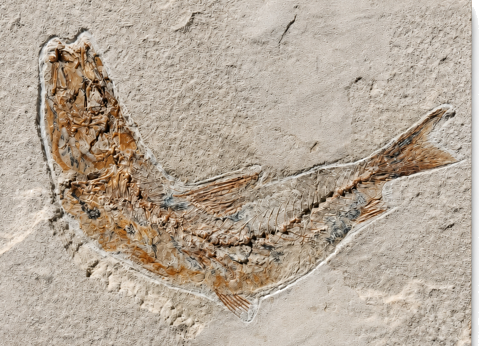
About the artifact: An authentic bony fish (Teleostei) fossil from the Late Cretaceous period – an exceptional specimen of Mesozoic era paleofauna. It was formed 100.5–66 million years ago (specifically in the Cenomanian age) in the territory of present-day Lebanon. This fish mortality plate was discovered in a very fine-grained micritic limestone (lithographic limestone), which is the calling card of the famous Lebanese localities. The fossil features a natural condition and flawless preservation of skeletal parts, opening an invaluable documentary glimpse into ancient marine life.
Technical information:
Origin: Lebanon (typical for the famous Haqel, Hjoula, or Sahel Alma localities)
Geological system: Mesozoic
Period/Epoch: Late Cretaceous (Cenomanian age, 100.5–66 million years ago)
Condition: Natural
Scientific name: Teleostei (bony fish)
Number of items: 1 plate
Artistic and structural analysis: This specimen demonstrates a gracefully curved fish body silhouette, naturally imprinted in a light, creamy lithographic limestone matrix. The fossil stands out for its exceptional anatomical detail – the vertebral axis, fine rays of the tail, dorsal, and ventral fins, the cranial bone structure, and internal skeletal elements are perfectly visible. The mineralization of the fish tissues and bones led to the formation of warm, brown, and ochre shades, creating a highly vivid, aesthetic contrast with the soft, smooth surface of the rock background. The complete naturalness of the plate allows observing the authentic fixation of the prehistoric animal without industrial modifications.
Historical and geographical context: During the Late Cretaceous period, the territory of present-day Lebanon was covered by the warm, shallow Tethys Sea, characterized by active biodiversity. Specific ecological conditions – a periodic lack of oxygen in the bottom layers and the accumulation of extremely fine sediments (micrite) – prevented the decomposition of the fish bodies and protected them from predators and scavengers. This phenomenon turned the Lebanese limestone deposits into one of the world's most important paleontological windows into the evolution of Cretaceous marine ecosystems, where bony fish (Teleostei) underwent an intensive diversification phase that laid the foundation for modern fish diversity.
Collectible and investment significance: The market value of this Lebanese bony fish specimen is defined by several essential aspects. First and foremost is the recognized and globally valued origin, as the lithographic limestone of the Haqel, Hjoula, and Sahel Alma localities traditionally guarantees the highest class of preservation among collectors and museums. Also valuable is the natural condition of the object without artificial reconstructions, which is an essential value criterion in the modern paleontology market. The expressive, dynamic pose of the fish and the excellent visibility of the fin structure contribute to its value, giving the specimen a high visual and artistic impact. Finally, the object features versatile application, as this aesthetic plate ideally suits systematic fossil collections, luxurious cabinets of curiosities, or serves as a unique accent of naturalistic art in an exceptional interior.
This marine inhabitant from the Mesozoic era, approximately 90 million years old, is an authentic document of Cretaceous nature, harmoniously combining scientific weight, the natural beauty of the rock, and long-term collectible potential.