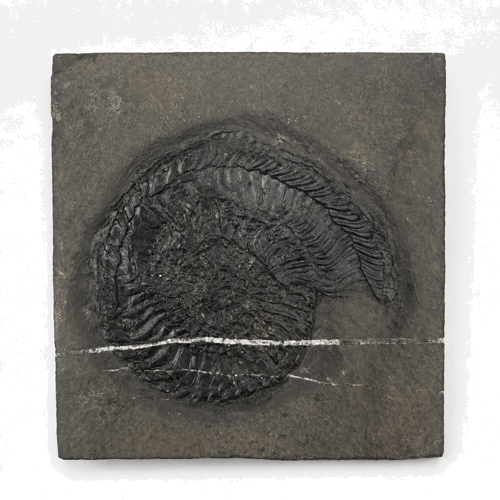
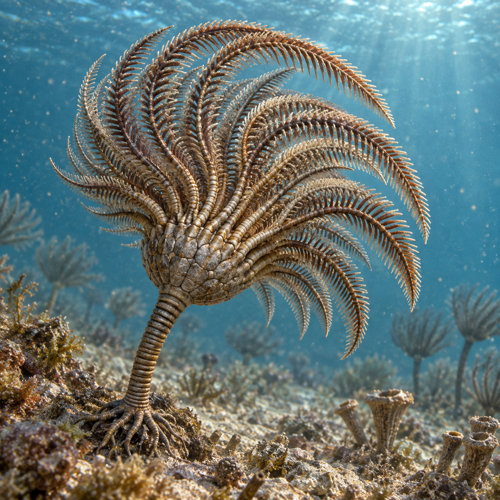
This sea lily fossil (Scyphocrinites) is an exceptional natural history specimen from Morocco, approximately 420 million years old. Despite their name, sea lilies were not plants but echinoderm animals related to modern starfish and sea urchins. Scyphocrinites lived at the boundary between the Silurian and Devonian periods and used their branching arms to filter food particles from the water.
Preserved elements of the calcitic skeleton and fragments of extensively branching arms stand out in relief against the dark rock slab. The carefully prepared surface reveals the fossil’s complex structure and a natural fan-like pattern. Black and dark grey tones, together with light mineral veins, create a striking and authentic composition.
This fossil makes an impressive addition to a palaeontology or mineral collection, a distinctive interior accent, or a meaningful gift for anyone interested in geology and natural history. Each specimen is unique, so its shape, fossil arrangement, colours, and relief may vary. Natural veins, small cracks, cavities, and surface irregularities are features of its natural origin rather than product defects.