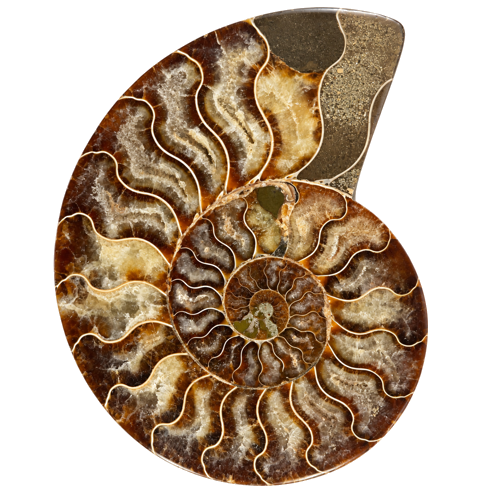
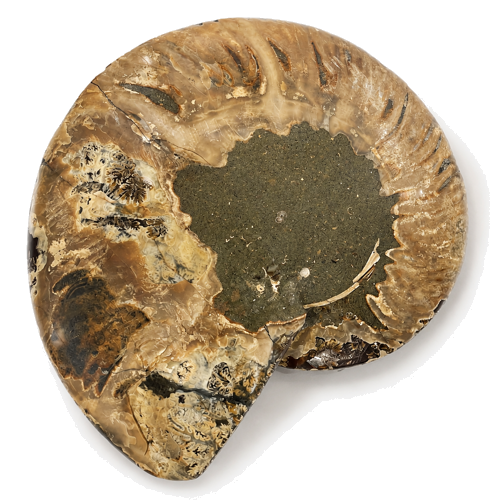
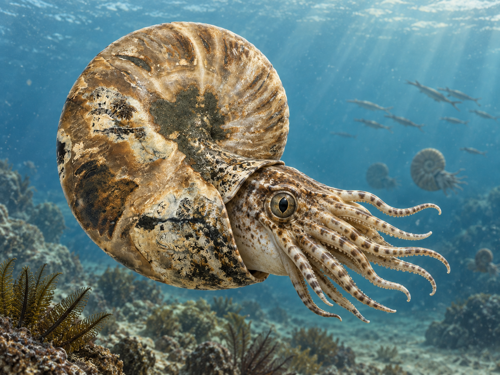
This polished ammonite fossil of the genus Cleoniceras is a distinctive natural history specimen from Madagascar, approximately 110 million years old. These ammonites, which lived during the Early Cretaceous Period, were extinct marine cephalopod molluscs related to modern squids and octopuses.
As the ammonite grew, its shell formed a regular spiral and was divided into separate chambers. Over millions of years, the fossilised shell and its cavities became filled with sediment and minerals. The carefully polished surface reveals the shell’s internal structure, the outlines of its chambers, intricate natural patterns and expressive brown, sandy beige, cream and dark grey tones.
The fossil is ideal for complementing a palaeontology or mineral collection, decorating an interior or giving as a meaningful gift to someone interested in geology and natural history. Each specimen is one of a kind, making its colours, mineral inclusions, fossil pattern and shape unique. Natural veins, small cracks, cavities and surface irregularities are characteristics of the fossil and are not considered defects.