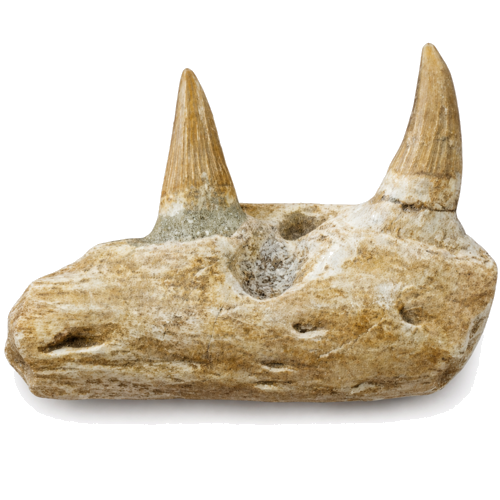
About the item: An authentic mosasaur (Mosasauridae) jaw fragment with two naturally preserved teeth – an exceptional fossil discovery of Late Cretaceous marine fauna from Morocco. Mosasaurs were among the largest and most successful marine predators of their era, dominating the world's oceans approximately 70–66 million years ago. Found in the famous Oued Zem phosphate region, this specimen stands out for its well-preserved jaw structure and naturally retained teeth, making it highly valuable from both a paleontological and collectible perspective.
Technical Information: The dimensions of the specimen are 7 × 5 cm, weight – 53 g. The object consists of a fossilized mosasaur (Mosasauridae) jaw fragment with two remaining teeth. Place of origin – Oued Zem region, Morocco, one of the world's most important deposits of Late Cretaceous marine fossils. The fossil dates back to the Maastrichtian age, Late Cretaceous, approximately 72–66 million years ago. The specimen has retained its completely natural condition, showing no signs of restoration or gluing. The object was acquired directly from local fossil collectors in the Oued Zem region.
Artistic and Structural Analysis: The fossil clearly displays a compact jaw fragment retaining two cone-shaped teeth with characteristic longitudinal enamel ridges. The tooth enamel features natural brownish and yellowish shades that contrast with the lighter fossilized bone matrix. This contrast gives the object particular expressiveness and allows for a visual appreciation of the natural fossilization process. Despite millions of years of geological processes, the teeth have maintained their original anatomical shape and strong bond with the jaw fragment, making the find highly representative.
Historical and Geographical Context: During the Late Cretaceous period, the territory of modern-day Morocco was covered by the warm, shallow seas of the Tethys Ocean. They were inhabited by a rich and diverse marine fauna – mosasaurs, plesiosaurs, sharks, crocodyliforms, and numerous fish species. Millions of years of sedimentation and mineralization processes resulted in the excellent preservation of these organisms' remains within the phosphate beds, which are today considered among the most important marine fossil deposits in the world. The Oued Zem region is particularly renowned in the international paleontological community for high-quality fossils of mosasaurs, sharks, and other Cretaceous animals.
Collectible and Investment Significance: The market value of this specimen is determined by the naturally preserved jaw fragment with two teeth in their anatomical position – such discoveries are valued much more than individual, isolated loose teeth. Each fossil is a unique creation of nature formed over millions of years, making it impossible to find identical specimens. Mosasaur fossils from Morocco have remained highly sought after among paleontology collectors, natural history museums, and fossil enthusiasts for many years. Due to its good preservation, clear origin, and aesthetic composition, this find will become a valuable accent for both an educational display and a private collection. This approximately 70-million-year-old mosasaur jaw fragment is an authentic witness to the Late Cretaceous marine world, distinguished by its scientific, aesthetic, and long-term antiquarian value.