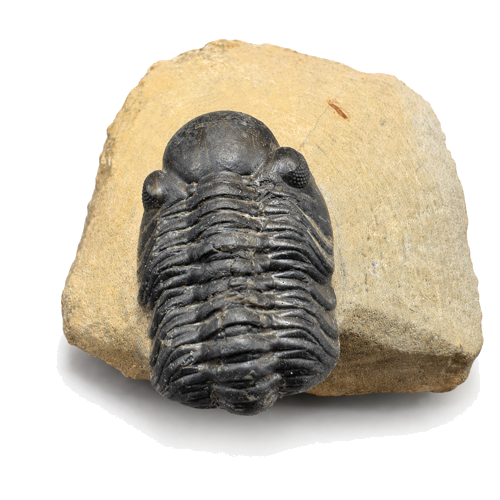
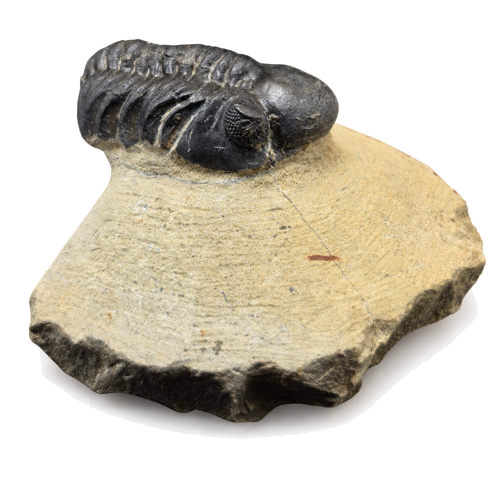
About the artifact: An authentic fossil of an extinct arthroped – the trilobite Phacops – from the Devonian period, representing one of the most iconic and well-known life forms in Earth's history. This 5 cm specimen, discovered in Morocco, stands out for its excellent preservation and natural condition. The fossil provides an invaluable opportunity to take a close look at the fauna that dominated the planet's oceans hundreds of millions of years ago, and its detail and anatomical integrity guarantee strong collectible and educational appeal.
Technical information:
Height: 5 cm
Origin: Morocco
Geological system: Paleozoic
Period: Devonian (419.2–358.9 million years)
Condition: Natural
Scientific name: Phacops (Trilobita)
Artistic and structural analysis: This specimen demonstrates a three-dimensional, dark-colored Phacops trilobite exoskeleton resting on a stable base of a lighter rock matrix. The armor features practically perfect anatomy. The segmented thoracic segments and cephalon (head shield) are clearly visible. A special paleontological highlight of this specimen is the compound eyes, which have retained excellent structural definition and a deep faceted texture (schizochroal-type eyes). Fine reliefs and natural lines of the exoskeleton rise contrastingly above the rough, sandy rock background, creating an expressive, natural sculptural quality.
Historical and geographical context: Phacopids (genus Phacops) were widely distributed in the world's seas from the Silurian to the Devonian period, approximately 430–360 million years ago. As ancient seafloor dwellers, these arthropods possessed the most advanced visual system of their era – their large, prominent compound eyes allowed them to successfully navigate their environment and protect themselves from predators. The Moroccan region is recognized today as one of the richest and most unique Devonian fauna localities, where specific sedimentation conditions allowed the fragile bodies of ancient animals to fossilize while retaining the finest details of their chitinous coverings.
Collectible and investment significance: The value of this trilobite fossil in the antique market is defined by several essential aspects. First and foremost is the complete exoskeleton with a well-preserved, clear eye structure, which serves as a primary evaluation criterion among paleontology connoisseurs. Also highly important is its complete naturalness, as the specimen is presented in its original rock matrix without additional reconstructions or composite parts. The classic status of the object adds to its value, as trilobites remain the most popular and sought-after topic of ancient paleofauna collecting worldwide. Finally, the object boasts versatile application and decorativeness – due to its compact 5 cm format, this relic of the prehistoric ocean will become a flawless element of personal collections, a prestigious educational gift, or a unique accent in an intellectual interior.
This Paleozoic era relic, over 360 million years old, is an authentic document of Earth's evolution, where flawless natural detail, geological history, and elegant presentation create a stable, lasting value.