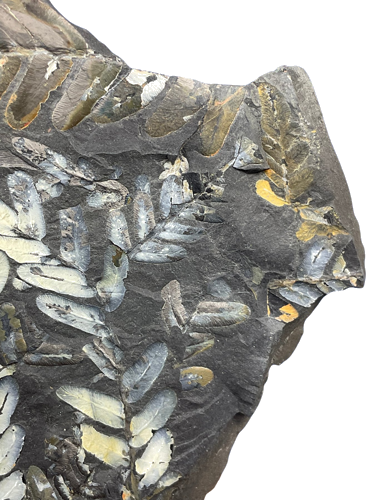
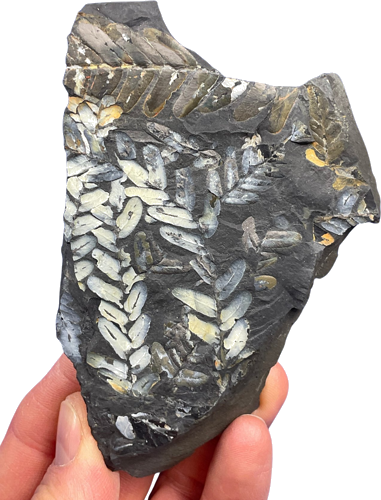
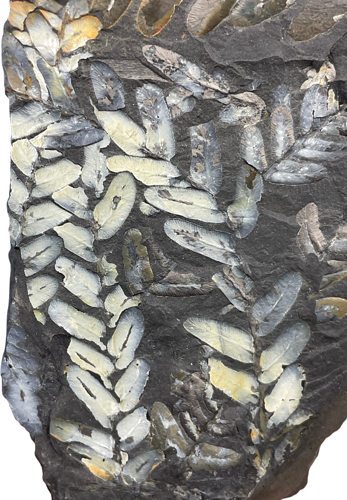
About the item: An authentic and exceptionally colorful leaf fossil of the extinct woody fern Neuropteris sp. from the Carboniferous period – a unique paleobotanical artifact formed 308–305 million years ago in the territory of present-day Germany. This specimen represents a genus of seed ferns, preserved within a dark rock matrix. The fossil stands out for its incredible natural color contrast and an extremely rare mineralization process that has transformed fragments of prehistoric flora into a striking visual masterpiece. Valued for its excellent preservation level and unique geological origin, this fossil possesses special aesthetic appeal and significant scientific value.
Technical information:
Height: 13 cm.
Width: 8 cm.
Depth: 2 cm.
Weight: 190 g.
Origin: Germany.
Geological system: Paleozoic era.
Period / Epoch: Carboniferous.
Condition: Natural.
Conservation: Stabilized, original colors maintained.
Structural and analytical breakdown: This stone slab demonstrates highly detailed and graceful leaf segments of the Neuropteris fern, arranged against a dark rock background. Visually, the most striking feature is the unusual, light (whitish and yellowish) pigmentation of the fossils themselves, creating a graphic, picturesque contrast with the matrix. This phenomenon occurred due to a natural geothermal process: volcanic heating beneath the fossil layers triggered a chemical reaction during which the plant remains were coated with a rare mineral called gümbelite. The structure of the leaflets, venation, and arrangement on the stem remain flawlessly clear, providing the composition with a sense of depth and natural three-dimensionality.
Historical and geographical context: During the Carboniferous period, massive tropical forests flourished on Earth, and the territory of present-day Europe was characterized by a wet, hot climate and swampy ecosystems. Plants of the genus Neuropteris were a vital component of these prehistoric forests. Although they resembled modern ferns in appearance, structurally they belonged to pteridosperms – seed ferns that had already developed a more advanced method of reproduction. Germany's geological layers are an invaluable resource for paleontologists, and local volcanic phenomena provided certain finds with unique mineral variations found nowhere else in the world.
Collectible and investment value: The market value of this paleobotanical specimen is defined by several key criteria. First and foremost is the unique mineralization – the natural color palette determined by the mineral gümbelite turns this fossil into an extremely rare anomaly on the market. The value is further elevated by the strong visual contrast, as the bright, light leaf details in the dark stone create exceptional aesthetic value, akin to a natural work of art. Added to this is the remarkable anatomical detail, as the clearly visible leaf morphology allows for precise species identification and analysis of ancient floral structures. Finally, the object features great collectible versatility, because due to its convenient proportions and stable weight, this German specimen is ideal for both specialized botanical collections and luxurious interior highlights. This is a floral relic over 300 million years old – an authentic document of Earth's evolution, in which scientific uniqueness, dramatic volcanic history, and incredible nature-made beauty blend in perfect harmony.