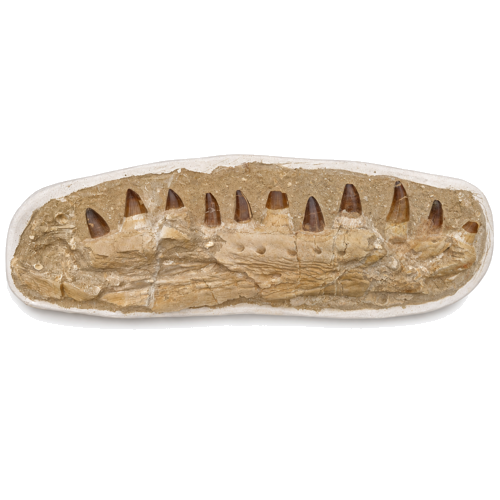
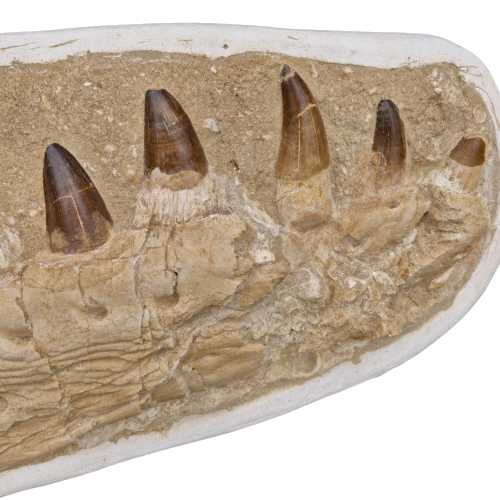
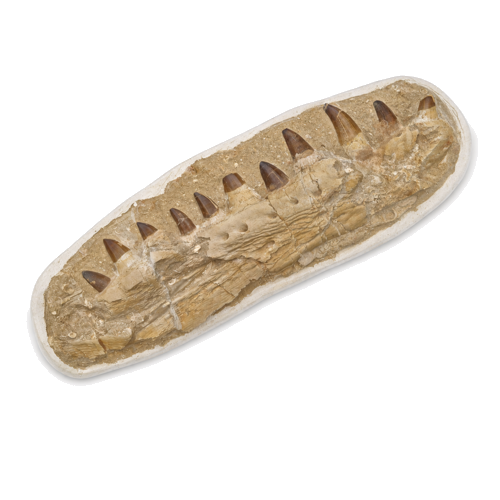
About the item: An authentic and monumental jaw fragment of a mosasaur (Mosasaurus beaugei) with eleven teeth from the Late Cretaceous period – an impressive artifact of a Mesozoic Era marine giant, formed 72–66 million years ago in the famous fossil beds of Morocco. This large geological specimen represents the anatomy of one of the most fearsome prehistoric marine predators, preserved in natural phosphate rock. Valued for its massive format, excellent preservation of bone structure, and scientific weight, this jaw boasts museum-grade presence and extraordinary visual and collectible appeal.
Technical Information:
Height (length): 74 cm
Width: 24.5 cm
Depth: 12 cm
Weight: 16 kg
Origin: Oued Zem, Morocco (brought from phosphate mines in 2025)
Geological system: Mesozoic
Period/Epoch: Late Cretaceous (100.5–66 million years; specific find age – 72–66 million years)
Condition: Restored / Conserved
Accessories: Information card and Certificate of Authenticity included
Artistic and Structural Analysis: This monumental specimen displays a powerful jawbone fragment featuring an impressive row of eleven large, conical predatory teeth. The jawbone retains the authentic, rugged, and porous bone texture of the prehistoric reptile, resting naturally within a sandy matrix. Since most mosasaur teeth found in rock are naturally fractured due to geological pressure, they have been professionally strengthened and stabilized using specialized paleontological bonding materials (conserved), with some teeth precisely reinserted into their original anatomical positions within the jaw. The glossy, dark brown surfaces of the tooth enamel rise in sharp contrast against the light, yellowish rock base, creating a menacing and incredibly lifelike composition of a prehistoric predator's maw.
Historical and Geographical Context: Mosasaurus beaugei was one of the largest and most powerful species of mosasaurs – marine reptiles closely related to modern monitor lizards and snakes – that dominated the global oceans at the very end of the Cretaceous period. These animals occupied the apex of the food chain and were the true terror of the ancient seas. The phosphate mines of Morocco's Oued Zem region are world-renowned as one of the richest deposits of Late Mesozoic fauna, where ideal sedimentation conditions on the ancient ocean floor preserved fossilized remains to the present day. The discovery and analysis of this jaw help scientists better understand the structure of Cretaceous marine food webs just prior to the great extinction of dinosaurs and other large reptiles.
Collectible and Investment Value: The market value of this mosasaur jaw is defined by several key aspects. First and foremost is its monumental size and weight – a solid fragment measuring a full 74 cm in length and weighing 16 kg with 11 teeth is categorized as a premium-tier, museum-quality specimen that rarely appears on the market. Its anatomical expressiveness is also highly valuable, as the preparation used to stabilize the teeth was executed while maintaining maximum aesthetic harmony, unveiling the true power of the predator's jaw. Full documentation further enhances its value, as the accompanying certificate and information card guarantee transparency and added security. Finally, the object boasts exceptional presentation power; such a massive relic of the Mesozoic Era with a visually striking, aggressive aesthetic will undeniably become the ultimate centerpiece in serious paleontology collections, luxury interiors, or cabinets of curiosities.
This is a spectacular, approximately 70-million-year-old relic of a ruler of the deep – a powerful document of prehistoric nature, where scientific weight, monumental size, and a dramatic appearance unite to create exceptional collectible and investment value.