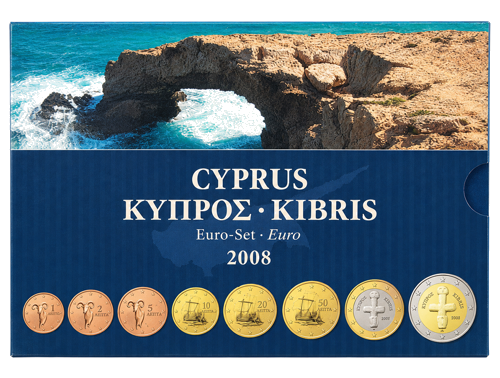
Obverse: The set consists of eight 2008 Cypriot euro coins ranging from 1 cent to 2 euros. The 1, 2 and 5 cent coins depict two Cyprus mouflons, wild sheep characteristic of the island. The 10, 20 and 50 cent coins feature the 4th-century BC Kyrenia ship, symbolising Cyprus's long-standing connection with the sea, trade and navigation. The €1 and €2 coins depict the cross-shaped Idol of Pomos from the Chalcolithic period, dating to approximately 3000 BC and regarded as one of the best-known symbols of prehistoric Cypriot art. The country name appears on the coins in Greek and Turkish as ΚΥΠΡΟΣ and KIBRIS, together with the year 2008 and the 12 stars of the European Union.
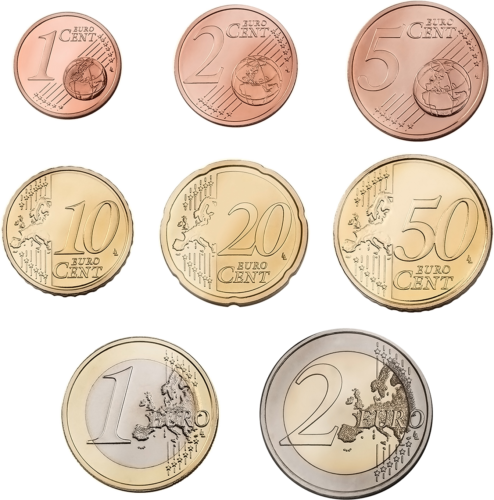
Reverse: The reverse of the coins features the common European design corresponding to each euro denomination. The 1, 2 and 5 cent coins depict Europe in relation to the world, while the 10, 20 and 50 cent and €1 and €2 coins feature the updated common design depicting Europe as a single geographical continent. The designs also incorporate the 12 stars symbolising the European Union.
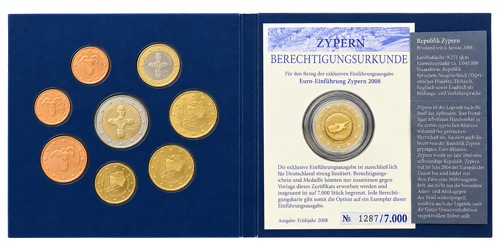
About the coins: The year 2008 was particularly important in Cypriot monetary history. On 1 January, Cyprus adopted the euro together with Malta and became a member of the euro area. The euro replaced the Cyprus pound at the fixed conversion rate of €1 = 0.585274 Cyprus pounds. These were the first Cypriot euro coins, with the BU coins struck by the Mint of Finland. The official 2008 Cyprus BU set had a mintage of 70,000 sets. This collectors packaging is supplemented by a medal and contains all eight first-year Cypriot euro coins, whose motifs represent the islands wildlife, maritime history and cultural heritage spanning thousands of years.