Market price (EUR for 1 oz)
Contacts
Gold
Silver
Currency
Diagrams
Account
Your cart is empty
My cart -
Clear the cart
Sum with VAT ...
VAT ...
Checkout
Precious metal prices in the cart are reserved for 10 minutes, after which the prices will be updated and will be reserved again.
Investment platinum: a comprehensive guide for beginners and experienced investors
Investing in platinum means buying this precious metal as bars, coins or financial instruments to preserve capital and earn long-term returns. Platinum is one of the rarest and most valuable metals, classified alongside gold and silver as a precious metal. This article explores its history, properties, practical uses and place in investing. It is intended for beginners and experienced investors and follows a structure similar to FLORINUS's educational articles on gold and silver.

Topics include platinum's discovery and historical significance, physical and chemical properties, industrial applications, physical and paper investment forms, market structure, advantages and risks compared with gold and silver, investment strategies, practical advice, common mistakes and investment psychology.
Platinum's discovery and historical significance
Platinum's history began before its official discovery in Europe. Although unknown there until the eighteenth century, indigenous South Americans used platinum-gold alloys for jewellery in pre-Columbian times. Spanish conquistadors first brought it to European attention in the seventeenth and eighteenth centuries. Finding nuggets in Colombia, they initially thought it was useless, immature silver and dismissively named it platina, meaning “little silver”.

In 1735, Spanish explorer Antonio de Ulloa became the first European to describe platinum in scientific literature following an expedition to South America. His 1748 report prompted closer investigation. Over the next few decades, scientists including William Brownrigg and Henrik Scheffer identified its exceptional properties, particularly its very high melting point and resistance to fire. Spain's so-called platinum age began in the late eighteenth century: French chemist Pierre-François Chabaneau purified platinum ore in 1786 and began making the first solid bars and utensils.

Historically, platinum was rarer than gold and difficult to work, so it was not widely used as currency. In 1828, however, the Russian Empire became the first and only country to mint circulating platinum coins. They remained in use for about 17 years before being abandoned because of processing difficulties. Platinum became more popular in the twentieth century with new deposits, including the enormous Merensky Reef discovered in South Africa in 1924, accounting for around 75% of global resources, and expanding industrial and jewellery applications.

Today, platinum is one of the four main investment precious metals, alongside gold, silver and palladium. Historically, rarity and demand often made it more expensive than gold, earning it the name “rich man's gold”. Its ounce price significantly exceeded gold's around 2000–2008, but after the 2008 crisis and changes in market structure, it fell below gold for a time. Despite fluctuations, platinum remains historically and industrially important. Its unique properties and scarcity secure its place among the most valuable metals and offer investors diversification beyond gold or silver.
Russian Empire platinum 3-rouble coin, 1835, Saint Petersburg
American Platinum Eagle coin, USA, 2007
Pattern platinum farthing, Great Britain, 1825
Rarity in nature
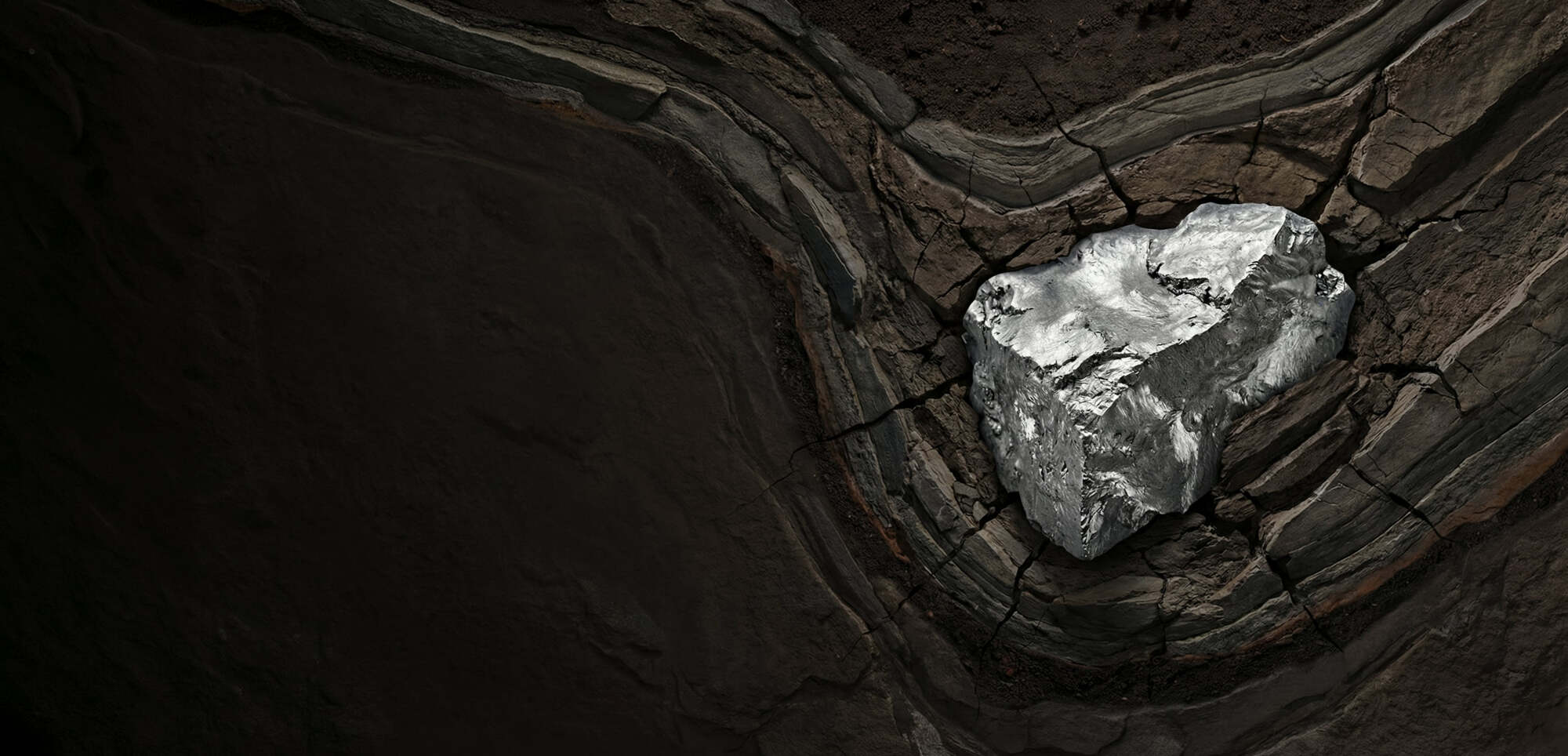
Platinum is exceptionally scarce in the Earth's crust, with a concentration of about 0.005 ppm, or 0.005 milligrams per kilogram of rock. Gold's concentration is comparable or slightly higher, around 0.004–0.005 ppm, while silver's is approximately 0.075 ppm, making silver about 15 times more common. Platinum deposits are consequently rare and usually occur with other metals such as nickel and copper, or in alluvial gold deposits. Historically important finds came from Colombia's Chocó region and Russia's Ural Mountains, which produced hundreds of tonnes in the nineteenth century. Around 80% of modern output comes from South Africa's Bushveld Complex, the world's largest deposits. Russia's Norilsk nickel deposits provide around 10–15%, with smaller amounts from Zimbabwe, Canada, the US and elsewhere.

The total quantity ever mined illustrates platinum's rarity. If all of it were placed in an Olympic swimming pool, it is estimated to reach only ankle height, whereas all mined gold would fill about three such pools. Annual production is also much lower: global platinum output in 2024 was around 170 tonnes, compared with approximately 3,000 tonnes of gold, just 5–6% as much. Platinum is about 30 times rarer than gold by total historical production, contributing to its high value and special status among precious metals.

Platinum combines high density, resistance to environmental effects, scarcity and a high melting point. These properties create demand in specialist applications and support its value as an investment asset capable of preserving wealth over time.
78
Pt
Platinum
195.08
Physical and chemical properties of platinum
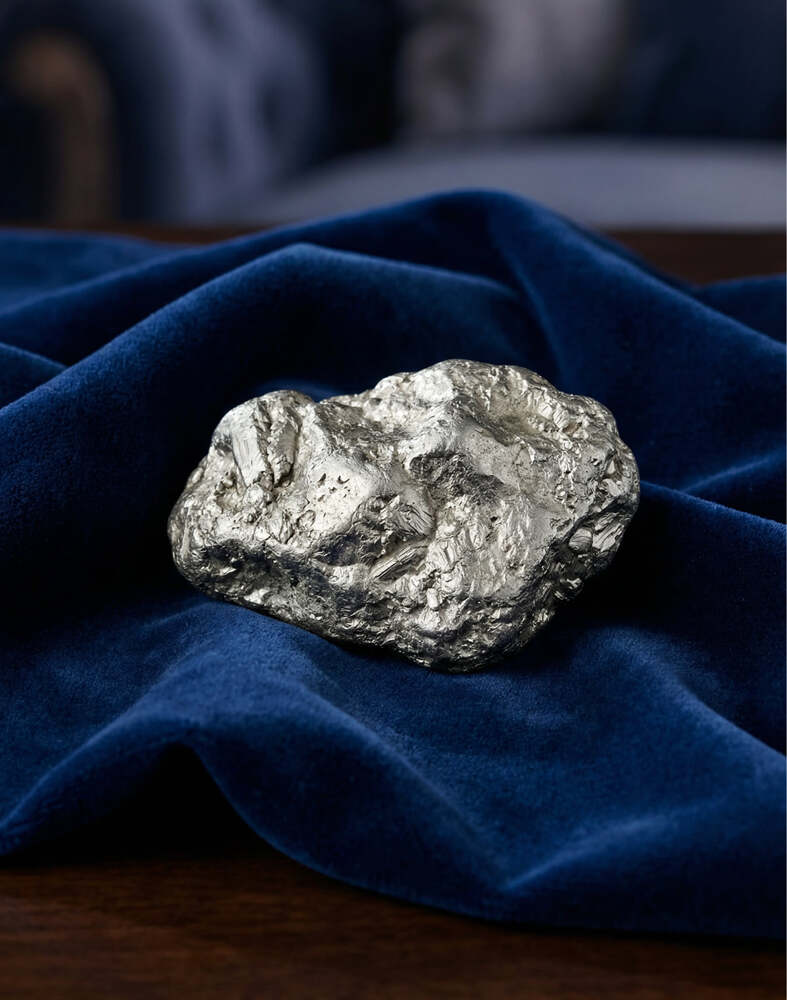
Platinum, symbol Pt and atomic number 78, is a shiny, silvery-white, hard and heavy metal. Its density is about 21.45 g/cm³ at 20°C, approximately 11% heavier than an equal volume of gold. It is exceptionally difficult to melt, with a melting point of 1,768°C and a boiling point of around 3,825°C. Traditional methods struggled to work it for centuries; craftspeople learned to melt it only in the late eighteenth century by combining it with other metals or using arsenic.

Platinum belongs to the platinum group metals (PGMs), alongside palladium, rhodium, iridium, ruthenium and osmium. It is chemically stable and highly resistant to corrosion and oxidation: it does not react with oxygen even at high temperatures, deteriorate or tarnish in air. Like gold, it is therefore classed as a noble metal that does not oxidise readily. Platinum also resists acids: hydrochloric and sulphuric acid have practically no effect on pure platinum. Only highly aggressive aqua regia, a mixture of concentrated hydrochloric and nitric acids, can dissolve it. This inertness and durability give platinum objects longevity: it does not cause skin allergies or oxidise, and platinum jewellery resists wear and retains its shine for decades.

Pure platinum is relatively soft, flexible and malleable, and can readily be rolled into sheets or drawn into wire. Small impurities, especially other PGMs such as iridium or osmium, can substantially change its properties, making it brittle or harder to work. Industry and jewellery therefore often use alloys, for example 95% platinum and 5% another metal, optimised for the application.
Industrial uses of platinum
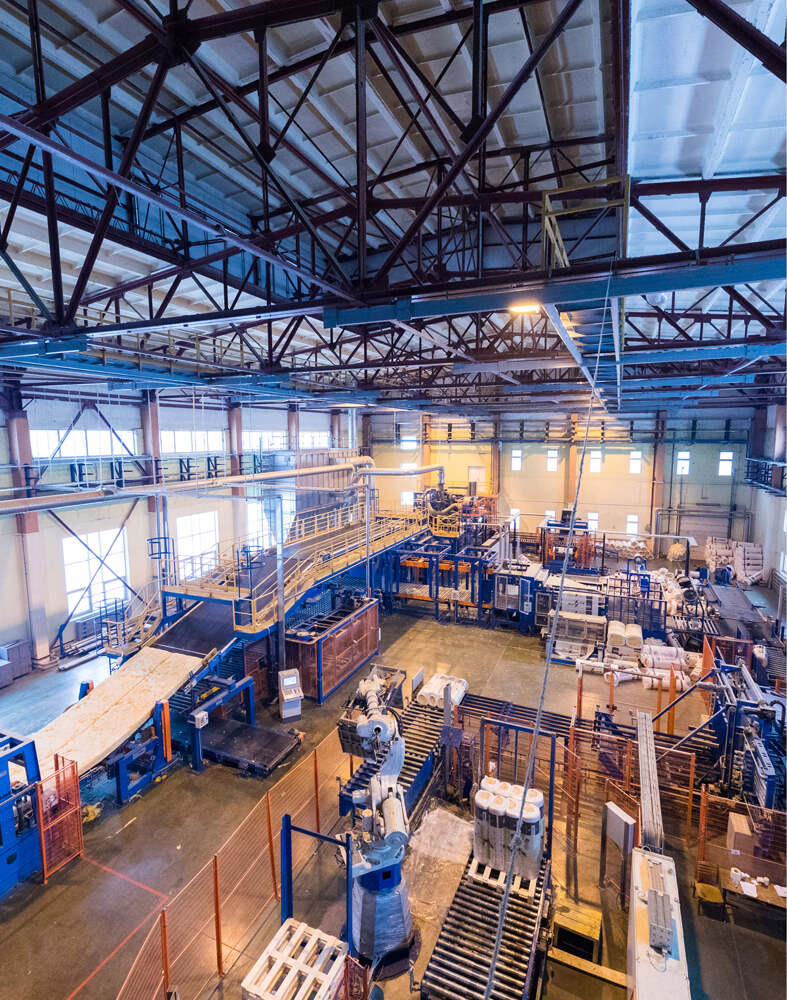
Platinum is valued for its wide industrial use as well as shine and scarcity. More than half of demand comes from industrial consumption rather than investment. The following are key applications where platinum is indispensable:
Automotive industry: catalytic converters
The automotive industry is the largest consumer, accounting for around 36–43% of platinum use. Catalytic converters use platinum to reduce harmful emissions by converting carbon monoxide and nitrogen oxides into less dangerous compounds. Stricter environmental standards make its ability to withstand heat and aggressive conditions essential. Palladium has partly replaced platinum in petrol vehicles, but platinum remains the main catalyst in diesel engines. Cleaner technologies also use it in hydrogen fuel cells to generate electricity. Battery electric vehicles need no exhaust catalysts, but hydrogen energy could increase demand. In the short term, traditional vehicle production cycles, regulations and electric vehicle expansion affect sector demand.
Chemical industry
Platinum is widely used as a chemical catalyst. Platinum-rhodium gauzes catalyse ammonia oxidation in nitric acid production for fertilisers. Platinum catalysts also support petroleum reforming to produce higher-quality petrol components and catalyse silicone polymerisation. Its stability suits corrosive substances and high temperatures. Although expensive, these catalysts are efficient and often regenerated, with the metal recovered through recycling.
Summary
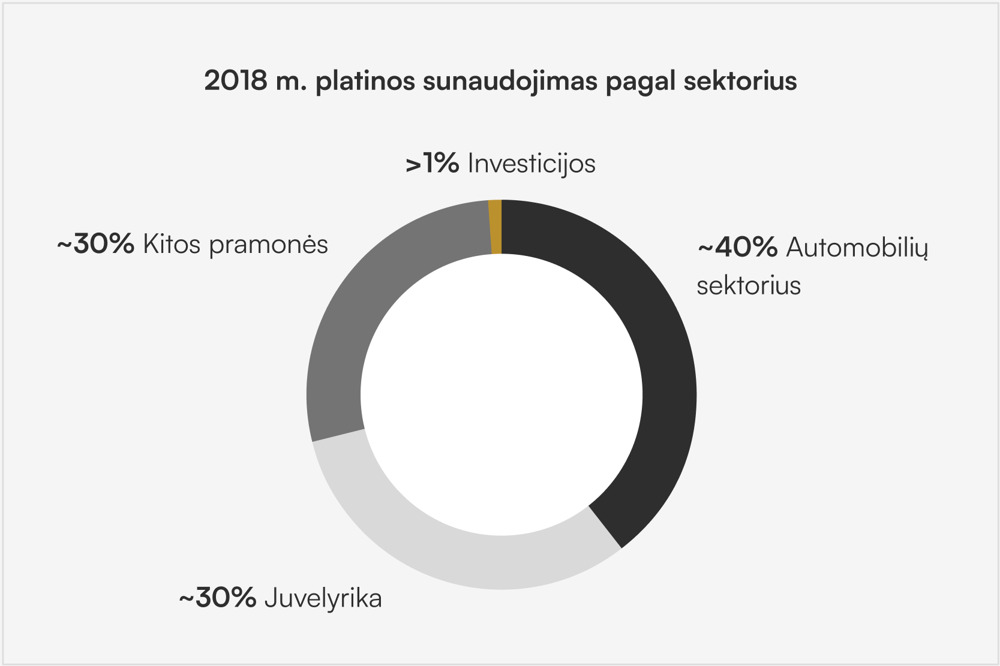
Platinum is an extremely versatile commodity. From vehicle exhaust systems to cancer drugs, its unique catalytic and physical properties solve complex technical problems. Figures from the 2020s indicate roughly 40% of consumption in vehicles, 30% in jewellery and 30% in other industries such as chemicals, electronics, energy and medicine, with investment below 1%. These shares vary annually, but value clearly reflects real economic needs as well as scarcity. Investors should therefore recognise that industrial cycles and technological change influence platinum more strongly than gold, which is more financially driven.
Forms of investment platinum: bars, coins, ETFs and paper platinum
Like gold and silver, platinum can be bought in several ways, each with its own characteristics, advantages and disadvantages.
Platinum bullion coins
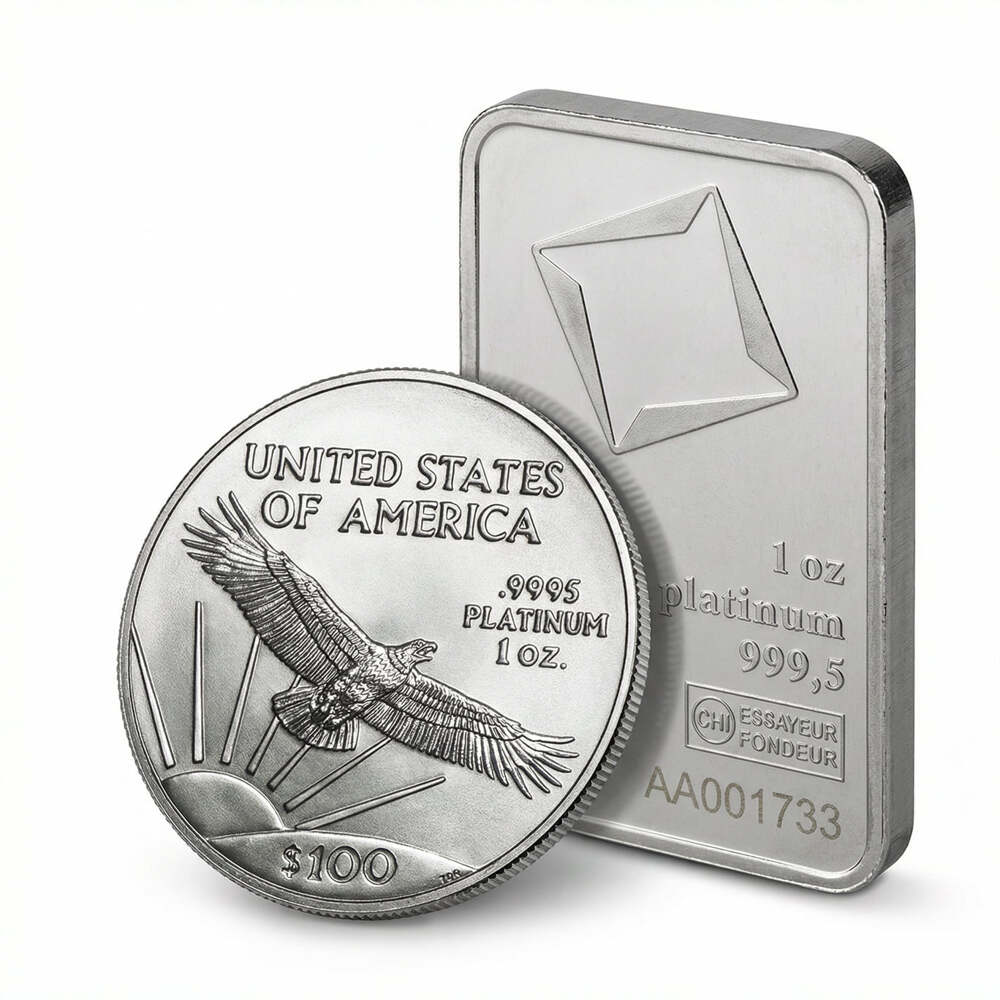
These are official mint-issued coins made from pure platinum with a specified weight and face value. Examples include the US American Platinum Eagle (1 oz), Canadian Maple Leaf (1 oz), British Britannia (1 oz), Austrian Philharmonic (1 oz), and Australian Koala or Kangaroo. Modern platinum coinage is relatively recent: the first platinum Britannia appeared in 2018. Coins generally have .9995 fineness.
Platinum bars
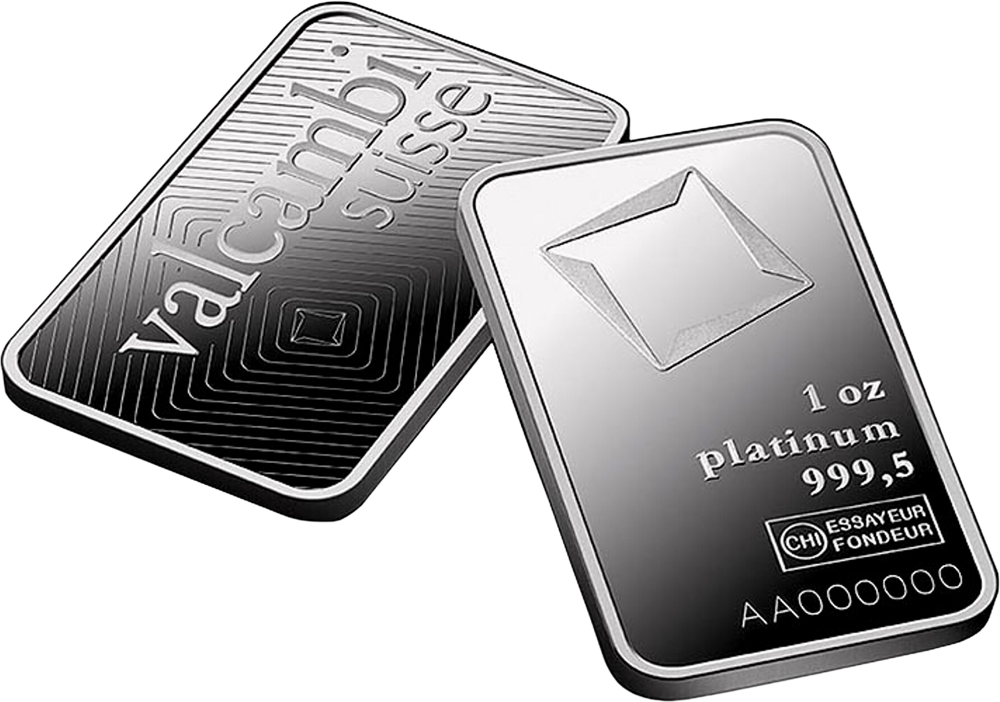
Investment bars usually have 999.5 fineness, meaning 99.95% pure platinum, and range from 1 gram or 1 ounce (31.1 g) to 100 g or even 1 kg. Certified refiners such as Valcambi, PAMP Suisse and Argor-Heraeus produce them, stamping each with its weight, purity and unique number.
Physical platinum gives direct ownership of a tangible asset. There is no third-party obligation: the bar or coin belongs to you. Standard bars and recognised coins are accepted internationally and can be sold wherever precious metals markets operate. A one-ounce Canadian Maple Leaf, for example, is readily recognised and liquid in Europe, the US and Asia.

Physical investment brings challenges. First are premiums and spreads: bars or coins often cost 3–10% above spot to cover dealer costs and profit, while buyback prices may be below spot. The combined spread can reach 6–10% or more, unlike the narrower spreads of financial instruments. Second are storage and security: metal must be kept in a home safe, bank vault or specialist facility, adding safe purchase or rental, insurance and theft-prevention costs. Third is divisibility: you cannot sell half a bar. A 100 g bar cannot supply the value of just 10 g without selling the whole bar or holding smaller units. Nevertheless, many investors find physical platinum most reassuring as tangible wealth and protection from financial-system risks.
Paper platinum: ETFs, futures and other financial instruments
Financial products allow platinum exposure without physically storing metal. The most popular are ETFs tracking market prices, generally backed by bars held in vaults against issued units. One example is the US-listed Aberdeen Standard Physical Platinum Shares ETF (PPLT), whose units each represent approximately one tenth of an ounce. ETFs make platinum exposure easy to buy and sell for a small transaction charge and annual management fee of around 0.5–0.6%. Liquidity and convenience are the main advantages: units can be traded at market prices during the session without storage concerns. Ownership is indirect, however, and investors must trust the manager. Although funds usually hold physical metal, in extreme circumstances such as a financial crisis, investors cannot simply collect bars and depend on the fund fulfilling its obligations. This counterparty risk is small but real, for example if a fund fails or changes its terms. ETFs also lack the psychological reassurance some investors obtain from possessing the actual metal.

Futures are another paper-platinum instrument, traded on exchanges such as COMEX in New York and TOCOM in Tokyo. A contract obliges the buyer or seller to transact a specified quantity, usually 50 ounces, on a set date at an agreed price. Physical delivery is uncommon unless specifically requested; most positions are closed financially before expiry. Contracts for difference (CFDs) also allow leveraged speculation on price movements. Futures and CFDs suit short-term speculation more than long-term investment because they incur financing, margin, spread and rollover costs and require active management.

Mining-company shares provide indirect exposure. Their value depends on platinum prices but also efficiency, costs and management. They may pay dividends, but carry equity-market risks. Beginners may find direct approaches, physical metal or ETFs, simpler.
Physical vs paper platinum
Bars and coins provide full control and protection from problems at banks or intermediaries because you own a real asset. They are less liquid, requiring a buyer or dealer and an agreed price, and have storage costs and wider spreads. ETFs, certificates and contracts are highly liquid and convenient for rapid position changes and diversification with small sums, but depend on financial infrastructure and may charge management fees. Choose according to your goals: bars and coins suit long-term physical wealth protection, while ETFs or futures may be more efficient for speculative profits. Many investors combine a long-term physical core in a vault with a smaller ETF position for short-term opportunities or rebalancing.
Platinum as an investment: advantages and risks
Platinum differs from conventional investments such as shares and bonds and even from gold and silver, giving it distinctive market behaviour. Investors should assess both benefits and risks. Here are the principal considerations, including comparisons with other precious metals.
Advantages:
Scarcity and preservation of value
Platinum is one of Earth's rarest metals, around 30 times rarer than gold by mined quantity. Limited supply supports long-term value, and complete loss of value is difficult to imagine because industry will continue needing it. It can hedge inflation similarly to gold: as currencies lose purchasing power, real assets such as precious metals appreciate. Historically, platinum has risen with inflation over decades, although short-term deviations occur.
Portfolio diversification.
Platinum has relatively weak correlation with traditional financial markets such as stock indices and even with gold. Adding it can diversify a portfolio and reduce overall risk. During economic expansion, industrial demand may lift platinum alongside shares, creating positive correlation. During a crisis, falling industry may depress platinum while safe-haven demand lifts gold. Platinum therefore behaves differently, providing another diversification dimension. As a real asset independent of central bank policy, it can also reduce reliance on fiat currencies. Although central banks do not hold platinum reserves as they do gold, it still offers individuals an asset outside conventional finance.
Growth potential
Platinum can rise sharply over short periods, particularly when a surplus turns into a deficit. With constrained supply, even a modest demand increase, such as carmakers replacing palladium with platinum, can cause imbalance and price jumps. WPIC projections in 2023 indicated a market deficit and declining above-ground stocks, prompting forecasts of potential appreciation in coming years. New applications in green energy and the hydrogen economy add strategic importance and could increase demand over time. Investors who believe in these trends see considerable growth potential. Compared with gold's established market, platinum may be undervalued: in early 2026 it remains substantially cheaper than gold despite often commanding a premium historically. Some interpret this as a sign that it is too cheap and may eventually restore the historical ratio.
Industrial demand provides a floor
Even if investors temporarily lose interest, use in vehicles, industry and jewellery creates a natural demand base. If prices fall too far, jewellers may buy more as a cheaper material, or carmakers may substitute it for palladium more intensively. This provides an economic floor linked to mining costs and substitution opportunities, preventing a fall to zero. The floor is not fixed, but can reassure investors that buyers will exist at some price.
Risks:
Price volatility
Platinum is among the most volatile precious metals, with percentage swings often exceeding those of gold or silver. Annual movements can reach 30–40%, compared with around 15–20% for gold. Its smaller market and concentrated supply mean disruptions or major investor activity can strongly affect prices. During the first COVID wave in March 2020, for example, platinum fell around 40%, then rose about 80% from the bottom over the following year. Such moves can be emotionally difficult and pose greater risk to investors unprepared for temporary losses. Lower physical-market liquidity also means wider spreads and fewer buyers, potentially requiring discounts to sell large quantities quickly.
Dependence on industrial cycles
Platinum lacks gold's safe-haven status. During financial crises or geopolitical turmoil, investors prefer gold, while platinum may suffer from weaker industrial demand. It therefore does not protect portfolios in difficult times in the same way. A severe global recession would likely reduce automotive and industrial demand and lower prices even with high inflation. Platinum may disappoint precisely when stability is needed. Technological change also poses risks: faster-than-expected adoption of battery electric vehicles could reduce exhaust-catalyst demand over coming decades and leave a surplus. Cheap catalyst alternatives, such as nanomaterials or improved recycling loops, could also reduce requirements. No practical substitutes currently exist in its main applications, but investors should follow industrial innovation.
A small market and speculative influence
Platinum's limited market size attracts speculators and funds capable of substantially moving prices. Hedge funds and other large players sometimes exploit liquidity gaps to bet on rises or falls, causing sudden rallies or sell-offs without major fundamental changes. Because central banks do not buy platinum reserves, there is no buyer of last resort to stabilise a crisis. Central bank purchases can support gold during declines, but platinum lacks this support. Trading volumes are much smaller than gold's, so even medium-sized funds can move prices when adjusting positions. Short-term movements become harder to predict and the market may appear unsettled or less efficient.
Lower liquidity and wider spreads
Transaction costs can be higher, especially in physical markets or less popular instruments. A rare platinum coin may be difficult to sell to a collector, and even standard bars may receive offers well below spot because of limited demand. ETF and futures liquidity is usually sufficient for ordinary amounts, but a sudden rush to sell can cause sharper declines in a shallower market. Large investors therefore face greater difficulty allocating substantial sums without moving prices than they would in gold.
Regulatory or tax changes
Some countries charge VAT or other taxes on platinum purchases. Investment gold is VAT-exempt in the EU, but platinum is not, apart from arrangements such as certain warehouse storage. This reduces investment efficiency, especially where VAT cannot be recovered. Government support for green technologies can increase demand through hydrogen while reducing it through combustion-engine restrictions and faster EV adoption. Political factors therefore create both opportunities and risks.
Compared with gold and silver
Gold provides stability and safety during crises that platinum lacks, but platinum offers greater growth potential during economic expansion or specific supply-demand imbalances. Like platinum, silver has substantial industrial demand, but correlates more closely with gold and has a broader investor market; some central banks, such as India's, also hold silver. Platinum is like gold with an extra gear: rarer, more industrial and more volatile. It may deliver higher returns but also more stress. Unless experienced in active position management, investors should consider at least 3–5 years to smooth cycle fluctuations.

Summary
Platinum appeals through scarcity, diversification and growth potential, but volatility and industrial risk require greater composure. It is best viewed as a complementary portfolio component. Nothing ventured, nothing gained, but investors should remember that platinum can be a bumpier ride than gold.
Strategies for investing in platinum
Approaches range from a large one-off purchase to regular accumulation, and from home safes to professional custody. The appropriate strategy depends on goals, budget, risk tolerance and time horizon. The following are key considerations for prospective platinum investors:
Lump-sum vs regular purchases
A lump-sum investment buys the intended quantity at once, perhaps after a price fall or when surplus funds become available. Dollar-cost averaging buys a fixed monetary amount monthly or quarterly regardless of price. A lump sum lets investors acquire more ounces immediately when prices seem unusually attractive and benefit fully from a later rise. It may also reduce transaction charges compared with many small purchases. Poor timing, however, can leave temporary losses. Regular buying averages entry prices across expensive and cheap periods, reducing timing risk and encouraging disciplined accumulation despite market noise. Many beginners buy small amounts, such as one ounce each quarter, gradually building a portfolio. This particularly suits volatile platinum by smoothing acquisition costs. The methods can be combined: maintain regular purchases but add a larger one after an exceptional fall. Have a plan and follow it without letting emotions dominate.
Personal storage vs professional vault services
Physical investment requires a storage decision: keep the metal yourself in a home safe or use a bank safe-deposit box or specialist vault. Home storage gives full control and immediate access without annual custody fees, but requires a reliable safe, alarm and possibly insurance. Theft or loss is your responsibility unless insured, and transporting valuable metal can create risks. Professional services, including FLORINUS storage, hold bars and coins in secure third-party vaults for a fee. Advantages include physical and electronic security, insurance and sometimes easier sales through transfers of ownership between clients. FLORINUS storage, for example, may allow VAT-free holding in a customs warehouse, online portfolio monitoring and collection or sale with company assistance. Drawbacks include annual costs, typically around 0.5–1% of stored value or a fixed box rental, and reliance on the provider. A combined strategy might keep a few coins at home as a liquidity reserve and larger holdings in a vault, or move to professional custody once the portfolio reaches a threshold.
Liquidity planning and an exit strategy.
Investors often focus on buying without planning the sale. Decide beforehand whether to sell gradually or all at once, and whether to use the original dealer, another buyer or a private sale. Liquid instruments such as ETFs are simple to sell on an exchange, while physical platinum requires finding a buyer, agreeing a price and possibly transporting the metal. Establish a relationship with a reputable dealer such as FLORINUS when purchasing and ask about buyback terms; many offer competitive repurchase services. Large bars such as 1 kg may be harder to sell at retail and require a wholesale buyer offering a lower price. A range of units, such as 1 oz coins and 50 g bars, makes partial sales easier than one large bar. For holdings intended to last 10 or more years and perhaps form an inheritance, keep documents and certificates and let heirs know where the assets are. If you have a price target, define it in advance and consider staged sales at intermediate levels to reduce regret about selling too early or late.
Combining platinum with other investments.
Platinum should not be your only investment. Decide strategically how much to allocate to precious metals and specifically to platinum. A common guideline is around 10–20% of the portfolio in gold, silver, platinum and palladium as insurance, with platinum perhaps accounting for a smaller 3–5% portion. Investors who understand the market and believe in its prospects may allocate more. Match the allocation to your risk profile: larger for aggressive investors and smaller for conservative ones. Even if platinum seems cheap, retain money for gold and other investments.
Monitoring and adjusting the portfolio.
Review your holdings periodically, perhaps every six months or annually, to ensure they still match your goals. If platinum rises sharply and represents much more than intended, rebalancing by selling some at a higher price and investing elsewhere can restore risk balance. If it falls without a change in fundamentals, consider whether to add at the lower price. Do not leave the investment entirely unattended: conditions change, so follow key information such as WPIC reports and automotive industry news. This does not mean worrying about prices daily, simply staying informed enough to adjust when necessary.
Summary
The best strategy is one you understand and feel comfortable following. Beginners may start with small regular purchases to learn the market and its price behaviour. Those with more capital and a clear plan may diversify through lump sums. Stay disciplined, invest regularly and avoid constantly chasing the perfect moment. Widespread fear may even offer an opportunity to add if you believe in the long-term outlook. Think ahead about storage, unexpected cash needs and taking profits. A considered strategy makes platinum a consistent financial decision rather than speculation.
Practical advice for investors
Physical platinum requires practical knowledge as well as financial decisions: recognising quality, choosing where to buy and arranging storage. The following tips help avoid mistakes and keep the investment process straightforward.
Choose a reputable supplier
Buying from a licensed, reliable dealer protects against counterfeits and overpayment. Look for good reviews, an established trading history and provenance documents. In Lithuania, official precious metals dealers with Bank of Lithuania licences are recommended. FLORINUS, for example, sells certified platinum bars and coins of the highest purity, operates in Vilnius, Kaunas, Klaipėda and Šiauliai, and offers professional advice. When buying online, check HTTPS security and genuine contact details, and preferably collect in person or use an insured courier. Avoid private classified sales unless highly experienced, as you may misjudge market value or encounter fraud. Official channels may cost slightly more because of VAT or margins, but the security is worthwhile.
Check purity and certificates
Investment platinum is generally sold at high purity, usually 999.5‰ or 99.95% Pt. Ensure the product meets investment standards; jewellery may be lower, such as 950. Bars usually come factory-sealed with a certificate card stating weight, fineness, serial number and the manufacturer's signature or stamp. State-minted coins generally show purity and denomination on the coin, for example “1 oz .9995 PLATINUM”. Avoid uncertain provenance or missing purity marks and certificates. Although platinum is less common, counterfeit bars filled with tungsten or cheaper metals and completely fake pieces still exist. Prefer internationally recognised manufacturers, 999.5 fineness and refiners on LBMA or London Platinum & Palladium Market (LPPM) lists, such as Valcambi, PAMP, Argor-Heraeus and Perth Mint. Official bullion coins are the most widely recognised choice.
Compare premiums
A physical product costs more than platinum's spot price. Dealers apply different premiums depending on the item, and smaller units generally carry a higher percentage than 100 g or 1 kg bars. Illustratively, a 1 oz coin may cost 5–10% above spot, while a 1 kg bar may cost 3% above. Compare several dealers' online prices on the same day and avoid unexplained large differences. Ask for the buyback price to assess the spread: selling at €100/g and buying back at €90/g implies a relatively wide 10% spread, while €95/g means 5%. Consider future liquidity as well. Special numismatic coins and medals may have collectible value, but standard products such as 1 oz or 50 g bars and popular coins are easier to sell close to market prices.
Storage and protection
If storing platinum yourself, invest in security. Choose a reliable safe, preferably built-in or heavy and with a high security rating providing resistance to forced entry for a specified period. Keep metals dry and avoid extreme temperatures. Platinum's chemical stability means no special corrosion protection is needed beyond original packaging. Leave bars in certified plastic cases and coins in capsules. Do not detach bars from certificate cards, as buyers prefer original packaging and may otherwise require fresh purity testing. Avoid frequent handling that could scratch mirrored coin surfaces. Consider insurance for substantial holdings; some policies cover precious metals, especially in safes. Maintain confidentiality by avoiding public discussion or social media photographs. Security begins with protecting information.
Planning a sale
Understand how you will realise the investment. Dealer custody may allow resale without transport; ask about procedures and fees. If storing personally, monitor prices and agree terms with a buyer when ready. Request several quotes in advance for larger quantities. Do not assume all physical holdings can be sold in one day unless a buyer guarantees acceptance; large purchases may require time to arrange funds or find onward buyers. Maintain a list of potential outlets: specialist dealers, pawnbrokers that actually accept platinum, banks where applicable, and international platforms such as eBay used cautiously because of fraud. Lithuanian banks generally do not buy platinum, so specialist dealers are the usual route. Keep invoices and certificate copies to facilitate sales, demonstrate authenticity and calculate taxable gains where applicable.
Tax considerations
 In Lithuania, investment platinum is not VAT-exempt like gold, so delivery from an EU seller includes 21% VAT. Possible alternatives described here include warehouse storage, where VAT does not apply until physical withdrawal, or buying through a foreign seller with different VAT treatment, such as Switzerland or Canada. These arrangements can be complex for beginners, who may prefer treating VAT as part of a long-term investment cost and hoping appreciation offsets it. Selling above the purchase price may trigger capital gains taxation, depending on jurisdiction. Lithuanian residents may owe personal income tax on profitable precious metals sales, with possible treatment linked to holding for more than a year; current rules should be checked. Keep invoices to substantiate acquisition costs. For large sums, consult a tax specialist about structuring purchases and sales, including whether spreading sales across calendar years could use any tax-free allowance.
Learning and professional advice.
Platinum markets span chemistry and economics. You need not be an expert in everything, but knowledge improves security. Read sources such as WPIC's Platinum Quarterly reports on supply and demand, reliable financial websites and specialist publications. Lithuanian coverage is limited, while Investing.com, Kitco and Reuters Commodities report key events. Ask specialists when uncertain. FLORINUS and other dealers can explain products, coin differences and storage. Asking before buying is better than regretting a decision. For example, an attractive coloured coin may have reduced investment value because its condition is no longer original, and cleaning a discoloured coin can scratch it and reduce value. Precious metals investment generally favours simple, established approaches: buy pure metal, preserve its condition and choose market-standard products.
Patience and emotional control
Be prepared for platinum's value to fluctuate. Do not rush to sell after a 10% decline or spend all available money because it rose 15% in a week. Set rules, such as investing over three years without changing the position unless the price doubles or halves. A considered policy helps avoid impulsive decisions. Plan responses to different scenarios in advance so that when they occur you have a process rather than relying on immediate emotion.
Summary
In practice, platinum investment requires attention to purity and certificates, a reliable dealer, responsible storage and informed decisions. These habits reduce process-related risks beyond the metal's price itself. A smooth investment process lets you await long-term financial results with greater confidence.
Common platinum investment mistakes and how to avoid them
Every investor learns through experience, but learning from others' mistakes is preferable. The following are frequent errors in precious metals investing, including platinum, and ways to avoid them:
Insufficient preparation and research.
A major mistake is buying blindly without studying market conditions, price history or supply-demand trends. Some beginners hear that platinum is rarer than gold and assume it must rise, or see a claim that it has become cheap without investigating why. Before investing, read educational articles, watch market analysis and compare historical charts. Understand drivers such as vehicle manufacturing, mining conditions and palladium prices, and check practical matters including VAT and buyback procedures. Lack of knowledge can lead to underestimated risk or missed alternatives, such as gold being more suitable for your circumstances. Invest time in understanding as well as money.
Buying from unreliable sources
Fraud includes counterfeit bars, fake online shops and classified-ad scams. Trying to save a few percent may result in a complete loss if the metal is fake or payment is stolen. Buy only from established, trusted suppliers. An ounce offered 20% below market is almost certainly fraudulent. Do not disclose personal information on unreliable sites. If buying privately, require verification and consider visiting a dealer, jeweller or pawnbroker together for testing. A slightly higher premium at a licensed dealer is preferable to a dubious bargain.
Overpaying for the wrong product
Investors sometimes buy collectible platinum coins with substantial numismatic value while thinking they are investing in the metal. Limited editions, coloured coins and boxed proof issues can carry large premiums. On resale, the buyer may discover they paid 50% above metal value for an item with little collector demand. Very small units, such as 1 g bars, also carry disproportionately high premiums. Define your investment purpose and choose low-premium products, usually popular coins and medium-sized bars. Avoid elaborate items unless you understand their value. A 1/10 oz coin may carry a 15–20% premium compared with 5% for 1 oz, or a proof may cost twice as much as equivalent bullion. Consider whether these extras are necessary. When offered attractive boxes and special sets, decide whether you are buying metal or decoration.
Rule: An investment product should track the market price as closely as possible. Paying substantially more means investing in artistic or collectible value, which follows different rules.
Overlooking additional costs
 Hidden costs can disappoint investors. Five years of safe-deposit rental may consume gains, or an overlooked 21% VAT charge may mean needing a roughly 26% recovery to break even. Calculate everything before buying: purchase premium, possible VAT, five or ten years of storage and selling costs. Then assess whether a profit remains plausible or costs are excessive. For short holdings, narrower-spread ETFs may be preferable. Physical platinum may not suit a one-year horizon because transaction premiums consume much of the return unless prices rise strongly. Also consider auction commissions, possible currency-conversion losses on dollar prices and the time required to sell. These details shape the investment experience and should be understood beforehand.
Excessive concentration and emotional attachment
Enthusiasm can lead to allocating too much, or even all wealth, to platinum and ignoring diversification. A decline can then trigger panic, while a rise may create overconfidence and further risk-taking. Emotional attachment can obstruct rational decisions such as reducing exposure or admitting a mistake. Remember that platinum is only one investment instrument. Follow your allocation plan, for example a maximum of 10%. Even with strong conviction, retain around 50% in traditional assets such as shares, bonds and gold as a reserve. Beware of fear of missing out: sudden rallies have repeatedly attracted late buyers just before reversals. Consistent investing with some missed upside is preferable to chasing prices. Do not become so attached to platinum that you ignore risks or adverse news such as rapid EV adoption.
Poor timing when selling
Two opposite errors are harmful. Impatience may lead an investor to sell after a year of no return, just before a sharp rise. Greed may lead another to ignore a 50% gain and wait for more, only to see it disappear after a reversal. A strategy with clear reasons for investing and exit targets helps prevent both. Give a long-term investment time to work rather than abandoning it prematurely. Metals can stagnate before sudden jumps: platinum weakened through 2015–2019, then surged in 2020–2021, so investors selling from boredom at the end of 2019 missed the rise. At the same time, once a target is reached, consider selling at least some rather than continually raising it. Staged exits, such as selling 30% at a target and another 30% after a further 10% rise, can help. Greed can prevent realising profitable investments. Taking profits is preferable to letting paper gains become losses through waiting too long.
Failing to identify and document physical metal for inheritance
Some investors store platinum at home or in a safe without anyone else in the family knowing or understanding it. If something happens to them, relatives may not know the assets exist or may fail to recognise their value. Inexperienced heirs have sometimes sold precious metals cheaply to pawnbrokers without seeking advice. Keep an inventory describing bars and coins and their approximate values. Tell a trusted person where they are stored and how to sell them. A will or separate note can recommend a sale route, such as contacting FLORINUS for buyback, helping prevent the investment from being lost unexpectedly.
Most mistakes stem from insufficient information or emotional decisions. Knowledge and discipline are the answer. Not every error can be avoided, but major ones often can. If unsure, pause, seek advice and reconsider. Investing is a marathon: consistent movement in the right direction matters more than reaching the finish in one leap. Platinum can be difficult for the unprepared, but rewards patient, informed investors.
Summary
Platinum can offer substantial benefits, but investors must take responsibility for secure storage and patience. Diversify both the portfolio and platinum formats, protect physical metal as valuable property, insure it where possible, and avoid letting short-term price waves derail your plan. Properly managed, platinum provides a long-term financial safety net and store of value rather than worries.
Start investing
with Florinus ID
We recommend applying on your phone - you will need
to use the camera during the process
We use cookies to ensure the proper functioning of the website, for traffic analysis, marketing and content personalization. Necessary cookies are essential for the functioning of our website. These cookies are always active and do not require your consent. You can find more information about cookies in our privacy policy.
Funkcinės tinklapio technologijos
Šioje svetainėje yra naudojamos tam tikros technologijos, kurios būtinos šios svetainės pilnaverčiam funkcionavimui. T.y. būtini (funkciniai) slapukai (angl. "cookies"). Šie slapukai yra automatiškai naudojami.
Statistinės bei analitinės technologijos
Šioje svetainėje yra naudojami analitinių bei statistinių įrankių slapukai (angl. "cookies"). Šie slapukai nėra privalomi. Jų paskirtis yra analizuoti vartotojų lankomumo istoriją, padėti pagerinti svetainės naudojamumą bei patogumą. Analitiniai slapukai, klasifikuojami šioje kategorijoje, yra nepersonalizuoti; iš patikimų partnerių su etiškomis duomenų registravimo praktikomis.
Išorinės technologijos, susijusios su reklama, vartotojų stebėsena
Slapukai, klasifikuojami šioje kategorijoje, apima reklamos agentūrų bei reklamos tinklų siūlomas technologijas. Šie slapukai nėra privalomi. Tai slapukai, kurių pagalba yra kaupiama personalizuota bei asmeninė informacija apie vartotoją; atliekamas duomenų profiliavimas reklamos tikslais.
Reject all
Accept all
Išsaugoti pasirinkimus
Cookie settings
Reject all
Accept all
Customize