Market price (EUR for 1 oz)
Contacts
Gold
Silver
Currency
Diagrams
Account
Your cart is empty
My cart -
Clear the cart
Sum with VAT ...
VAT ...
Checkout
Precious metal prices in the cart are reserved for 10 minutes, after which the prices will be updated and will be reserved again.
Gold: 5,000 years as a store of value and its investment potential
We explore gold's historical role, its physical and chemical properties, its distinctive position as an asset class, central banks' perspective, its performance in different conditions, limited supply and liquidity, and how it compares with other investments. We also discuss practical ways to invest in gold, including coins, bars and storage, its strategic role in a portfolio and common investor mistakes. This article is for both beginners and experienced investors, with information presented in a professional, confident and friendly way.
Gold's historical significance: money and a store of value for 5,000 years
Gold holds a special place in human history, having served as a measure and store of value for more than 5,000 years. It has been universally recognised as wealth since ancient civilisations. Even geographically and culturally distant civilisations, including ancient China, India, Mesopotamia and Mesoamerica, independently recognised gold's value, highlighting its universality as an asset. Gold has often been used as currency, from Pharaonic Egypt and the gold coins of the Roman Empire to the modern gold standard.

Historical evidence shows gold's consistent preservation of purchasing power. A famous comparison holds that one ounce of gold could buy a good toga in ancient Rome, a fine suit in nineteenth-century London, and a suit of similar quality today. This illustrates how gold helps preserve purchasing power through the centuries, unlike paper currencies. Government-issued fiat currencies have historically depreciated, while gold has maintained stable value over the long term. For example, the US dollar has lost more than 96% of its purchasing power since 1913, whereas gold has largely retained its ability to buy similar quantities of goods. This is even clearer during hyperinflation: in Weimar Germany in the 1920s, Zimbabwe in the 2000s and Venezuela in the 2010s, local currencies lost almost all their value, while gold preserved wealth through these crises.

Millennia of experience have shown that gold is money of last resort. When conventional currencies or financial systems collapse, physical gold remains valuable and desirable. Even after the gold standard ended in 1971, when severing the currency's link to gold exposed its price to market fluctuations, investors worldwide continued to see gold as a reliable store of value in times of crisis.
Gold tremissis of Honorius, issued in Ravenna (c. AD 395–423)
Gold dinar of the Mamluk Sultan Qutuz, minted in Alexandria, Egypt, in 1260
Late Antique gold jewellery from Asyut, Egypt, and Tartus, Syria. Approximately third to sixth centuries AD.
Gold disc earring with a woman's head and conical pendant motifs, Greek, c. 350–300 BC
79
Au
Gold
196.96
Physical and chemical properties of gold
Gold (chemical symbol Au, from the Latin aurum, atomic number 79) is a precious metal known for its unique properties. It is very dense, at around 19.3 g/cm³, making it almost 19 times heavier than the same volume of water. A small gold bar can surprise an inexperienced hand with its weight. Gold is soft, ductile and malleable: pure gold can be scratched with a fingernail, with a Mohs hardness of just 2.5–3. It can be drawn into fine wire or beaten into thin leaf; one gram can produce several square metres of gold leaf. It is also an excellent conductor of electricity and heat, although around 30% less conductive than silver.

One of gold's most important properties is chemical stability and resistance to corrosion. Gold does not react with air, rust or oxidise even in acidic or alkaline environments. Pure gold and gold objects therefore remain unchanged for centuries: archaeological finds such as jewellery and coins thousands of years old still shine like new. Gold can be dissolved only by aqua regia, a mixture of concentrated hydrochloric and nitric acids, and a few other powerful chemicals, but remains chemically stable under normal conditions. Its melting point is around 1,064°C and its boiling point about 2,856°C, indicating that it will not melt in everyday conditions or even in a fire. Gold also remains stable over time: it has no expiry date and can be stored indefinitely without losing mass or quality. These properties, including high density, softness and corrosion resistance, make gold easy to identify, work and store, which was important to its historical use as money.
More than another asset: gold has no issuer or bankruptcy risk
Unlike shares, bonds or paper money, gold has no issuer or third-party risk. Its value does not depend on any company's or government's ability to meet its obligations. It is nobody's debt or promise. Gold cannot go bankrupt, and corporate insolvency or currency depreciation cannot erase its value. This sets it apart from financial instruments that depend on an issuer's reliability. Bonds, for example, are valuable while the issuer, such as a company or government, can redeem them. A bank deposit depends on the bank's stability, and even cash or electronic money has value only insofar as the public trusts it and the issuing institution maintains its stability. Gold is an asset with intrinsic value: its worth lies in the metal itself, not in someone else's promise.

Another difference is that gold's supply cannot be printed or increased at will. Unlike currency, which a central bank can expand by printing banknotes or increasing electronic balances, the amount of gold on Earth is finite and new gold cannot simply be manufactured. New supplies can only be mined from the ground through a complex, expensive process. Gold therefore protects against currency depreciation caused by excessive issuance. Its scarcity and permanence have helped preserve its value through economic upheavals. Gold is also indestructible: it can be remelted or repurposed, but the metal itself does not disappear, unlike shares that may permanently lose their value in bankruptcy.

Gold's value is independent of political or economic conditions: it is recognised as valuable around the world and across time. Unlike most other investments, gold is a tangible physical asset whose worth is understood in every country. Even if confidence in governments or banks collapses, a pure gold bar or coin retains trust. Liquidity is another strength: gold can easily be sold on the global market, practically anywhere precious metals are traded. Universal value and liquidity give gold an advantage when confidence in other financial assets declines. Gold prices often rise when other investments fall: during high inflation, geopolitical tension or financial crises, investors turn to gold as a safe haven. Shares or bonds may lose value during these periods because of doubts about their issuers or deteriorating economic indicators. Gold is a distinct asset class, neutral and free from issuer risk.

Gold has no issuer risk, its supply is limited, and it is physical and universally recognised. These properties have earned it a unique reputation in finance. It is often seen less as a speculative instrument than as a foundation for financial security.
Why do central banks hold gold reserves?
If gold were an ordinary commodity, governments would hardly keep it in their treasuries. Yet the world's central banks together own about one fifth of all gold ever mined. These are enormous quantities: according to the latest figures, official gold reserves exceed 36,000 tonnes. Why do countries and their central banks hold so much gold? The main reason is the stability and credibility it provides to national financial systems. Central banks buy gold to protect national wealth from economic risks and strengthen confidence in their currencies. Unlike foreign currency reserves or bonds, gold is not tied to another country's political or economic situation. It is an independent store of value. Holding gold diversifies a central bank's reserves and reduces reliance on currencies such as the US dollar or euro. This trend has been particularly pronounced in recent years, with many emerging-market central banks actively increasing gold reserves to reduce dollar dependence. Central bank purchases reached a record in 2022, at approximately 1,082 tonnes, the highest in modern history, and exceeded 1,000 tonnes again in 2023. This demonstrates institutional confidence in gold even in today's financial world.

Central banks also value gold's role during crises and its long-term preservation of value. Global surveys show these are the main reasons central banks hold it. During financial shocks such as the 2008 crisis, for example, gold often rises or remains stable while other assets fall, helping protect national reserves. Gold also has no currency risk: no particular central authority can devalue it, so it is regarded internationally as a neutral reserve asset.

In practice, central banks use gold as the ultimate reserve. In extreme circumstances, when confidence in other instruments is lost, gold reserves can help stabilise a country's finances. Countries have historically sold gold or borrowed against it to defend their currency or meet international obligations. Although today's financial system uses currencies without gold backing, rising holdings in central bank vaults clearly confirm gold's continuing strategic importance. It is a financial safety net for national banks.
36,000 tonnes
of gold held in central bank reserves
1,082 tonnes
of gold purchased by central banks in 2022
When does gold shine as a store of value, and when does its lustre fade?
Gold is renowned as a store of value, but its effectiveness depends on the economic context. In some conditions it excels at preserving value and insuring against risk; in others, it may lag behind other investments. Investors need to understand when gold works best and when it offers less benefit.
When gold meets expectations as a store of value:
High inflation and currency depreciation.
Gold prices have historically tended to rise during inflationary periods as investors seek to protect purchasing power. When confidence in paper money falls, gold becomes an attractive alternative. During the stagflation of the 1970s and rising inflation in 2020–2022, for example, demand for gold increased in the expectation that it would preserve value as currencies depreciated. Gold is independent of central bank policy, so when interest rates fail to keep pace with inflation and real rates become negative, it benefits. Investors buy it as protection against deposits or bonds that are losing purchasing power.
Financial crises, recessions and geopolitical unrest.
During economic uncertainty or political turmoil, gold traditionally acts as a safe haven. When stock market volatility, banking problems or geopolitical conflicts increase, investors often move money into gold. Empirical evidence shows that during major macroeconomic shocks gold tends to rise or at least retain value while risky assets such as shares and commodities fall sharply. During the 2008 financial crisis, for example, the S&P 500 fell around 38%, while gold gained approximately 5% that year, moving in the opposite direction and protecting portfolios from larger losses. Similarly, in other crises gold often serves as insurance against black swan events, as its correlation with shares and other assets becomes negative or zero.
Eroding confidence in traditional finance.
When public or market confidence in banks, governments or currencies declines, for example because of banking unrest, large budget deficits or rising political risk, gold offers a reliable refuge. Its value has no counterparty: it does not depend on anyone else's solvency. Both individual and institutional investors therefore readily choose gold as a neutral asset that reduces systemic risk.
When gold may disappoint or be less effective:
Periods of economic growth and stability.
When the economy grows steadily, inflation is low and corporate profits rise, shares and other investments often outperform gold. Gold may stagnate or fall as investors favour assets that generate income or growth, such as shares. A historical example is 1980–2000: over those two decades, gold fell from around $850/oz to $250/oz in nominal terms, while stock indices rose strongly amid economic expansion, technological breakthroughs and falling inflation. Gold often lags during stable periods. As analysts observe, shares deliver higher long-term returns, while gold offers less benefit when there is no need for insurance. In calm years, gold may stand still while other portfolio components grow.
High interest rates
When central banks raise interest rates and bonds or deposits offer high, safe returns, holding gold becomes relatively less attractive. Gold pays no interest or dividends, so investors face an opportunity cost: they miss out on interest by holding a non-yielding asset. If inflation is controlled and real interest rates are positive, gold faces stronger competition. In 2022, for example, rapidly rising interest rates and a stronger US dollar kept gold roughly stable rather than sending it soaring with inflation, because higher-yielding alternatives reduced its short-term appeal. A strong dollar also puts relative downward pressure on gold: since global prices are usually quoted in dollars, a more expensive dollar makes gold costlier for foreign investors and reduces demand.
Market euphoria and technological breakthroughs
Market euphoria and technological breakthroughs. At times, investors become willing to take risks and chase very high returns in new areas, such as technology shares, property or emerging asset classes like cryptocurrencies. “Boring” gold can temporarily lose its appeal. Demand weakens as many investors pursue more aggressive investments. History nevertheless shows that euphoria is often followed by a correction, bringing attention back to gold as a source of stability.
Summary
Gold works best as a store of value when conventional financial assets face challenges such as inflation, crises or loss of confidence. It performs less well when the economy thrives, interest rates are high and risks are minimal. It has a dual role: valuable insurance for difficult times, though it may earn less than other investments in good times. It is therefore important to take a long-term view and have realistic expectations about why gold is held in a portfolio.
Limited gold supply and global market liquidity
Gold's value is supported by both demand and an extremely limited, slowly growing supply. Unlike industrial metals, whose production can be increased relatively quickly by expanding mines, gold extraction faces physical and economic constraints. Annual mining adds only around 1–2% to existing global gold stocks. This is very modest growth, lagging behind the world economy and making gold relatively scarcer compared with the growing money supply. According to the World Gold Council, all gold ever mined would fit into about three and a half Olympic swimming pools, illustrating how small its absolute quantity is. With supply growing slowly, demand changes strongly affect price: a sudden rise in demand from investors or central banks cannot be met quickly, so prices rise. Opening a new mine can take 5–20 years and requires enormous investment. Even higher gold prices therefore do not quickly increase output, giving gold a scarcity premium.

Despite limited supply, gold is one of the world's most liquid markets. It is traded in major financial centres, including London, New York, Zurich and Shanghai, almost around the clock on weekdays. Physical gold can be sold quickly in practically any global financial centre, supported by internationally recognised standard bars and coins. Daily transactions on the London gold market run into tens of billions of dollars, alongside active futures and ETF trading. An investor who wants to sell can therefore find a buyer at the market price at any time. Property, by comparison, may take months or years to sell, whereas gold can usually be realised in minutes or hours, depending on the quantity.

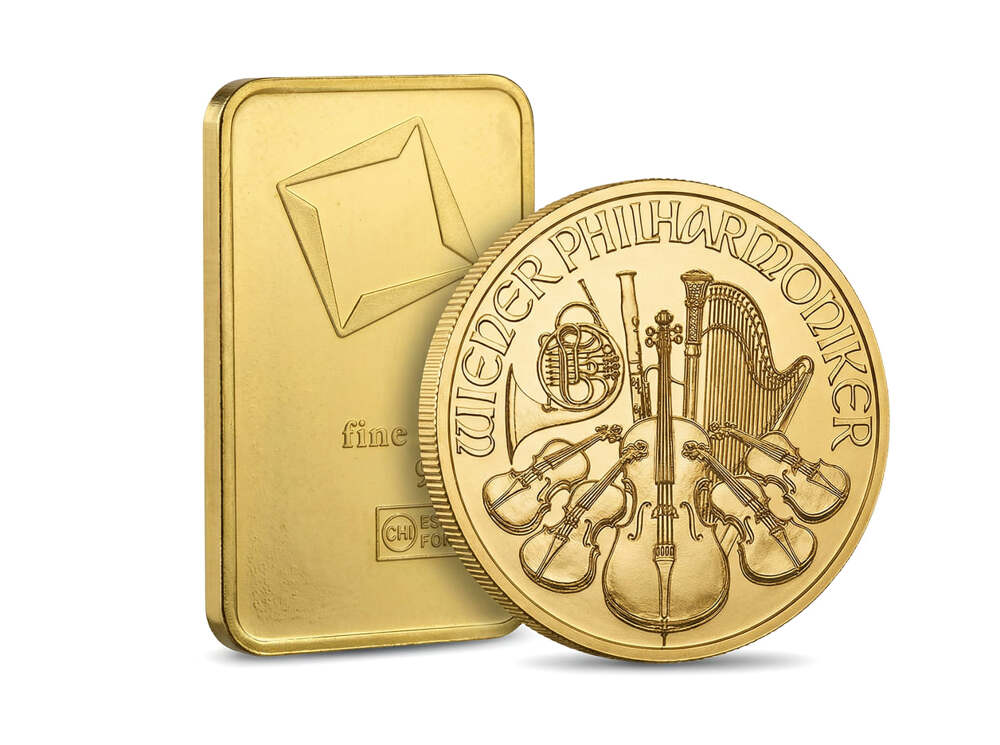
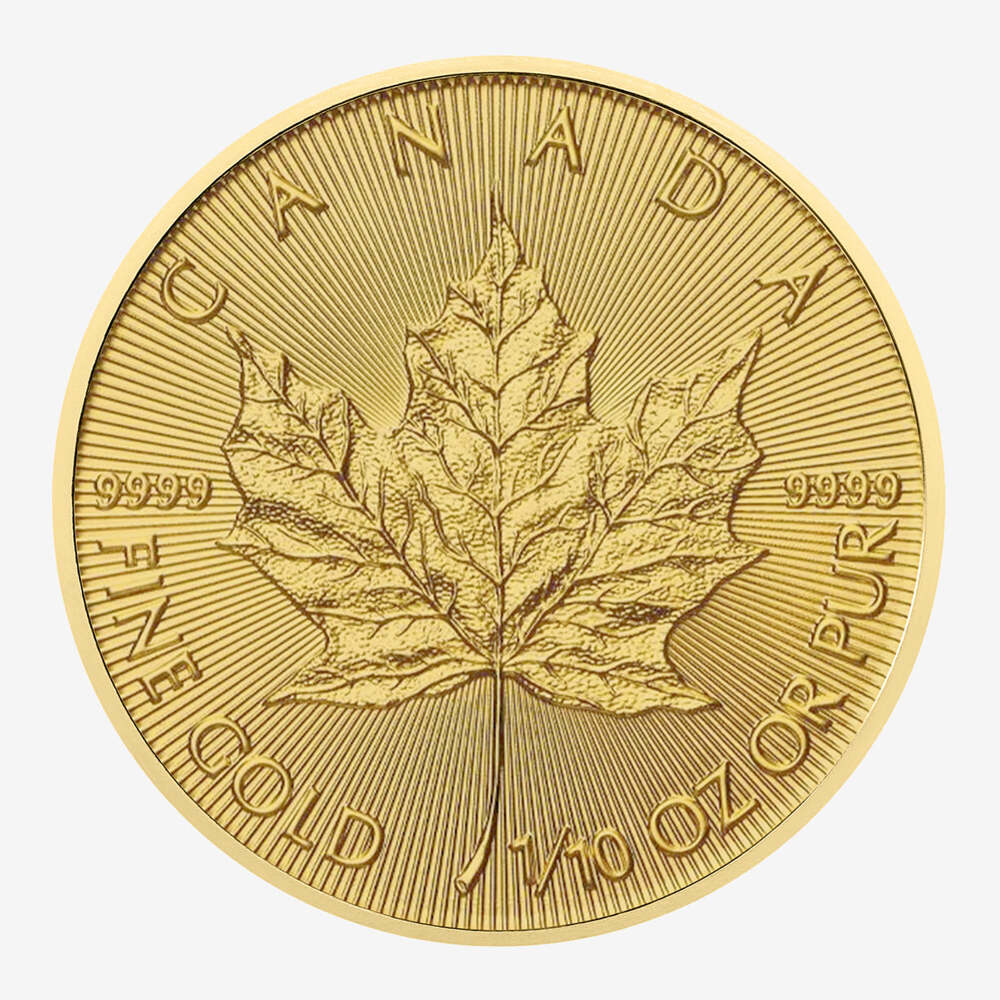
Standardisation also supports gold's liquidity. Investment bars are generally produced in standard weights, such as 1 oz, 50 g, 100 g and 1 kg, with high purity (999.9 fineness) and certification by recognised manufacturers. This helps ensure acceptance worldwide without significant doubt. Popular coins such as the Krugerrand, Canadian Maple Leaf, American Eagle and Vienna Philharmonic are likewise recognised by dealers around the world. Global demand and recognition make gold readily convertible into cash or another currency. Even during economic crises when other assets may become illiquid, gold remains sought after by private investors, institutions, jewellers and industry. The gold market also distinguishes between paper gold and physical trading. Instruments such as futures and ETFs allow large amounts to be traded without moving physical bars, further increasing liquidity. For investors holding physical gold, however, liquidity also depends on the form chosen, as discussed in the practical investment section.
Summary
Gold's naturally limited supply keeps it scarce and valuable. Surges in demand push prices higher because supply cannot keep pace. At the same time, gold is highly liquid, among the easiest physical assets to sell globally. This combination of scarcity and liquidity makes it a unique investment.
Comparing gold with property, shares, cryptocurrencies and ETFs
As an investment, gold is worth comparing with other popular asset types. What similarities and differences, advantages and disadvantages does it have relative to property, shares, modern cryptocurrencies or funds such as ETFs?
Property
Shares
Cryptocurrencies
ETFs
Gold vs property
Property is tangible like gold, but highly illiquid: selling a house or plot may take months, while gold can be sold in minutes. Property values depend on location and market conditions, and ownership involves maintenance, repairs and taxes. Gold needs no maintenance or upkeep beyond a possible modest storage charge. Property's advantage is income generation through rent, while gold produces no income. Property is also immovable and highly segmented: house prices may fall in one city, whereas gold is global, with a price shared across markets. For diversification, gold offers greater liquidity and universality, while property may deliver higher long-term returns in a steadily growing economy. Strategies often combine both: property provides income and growth, and gold provides a liquid safety reserve.
Gold vs shares
Shares have historically delivered higher long-term returns than gold because they reflect corporate profit growth. Their prices are highly volatile, however, and can fluctuate sharply with sentiment, company results and economic cycles. In normal conditions, gold generally fluctuates less than shares, though more than bonds. Crucially, its correlation with shares often turns negative during crises. When stock indices fall, as in 2008 or at the start of the 2020 pandemic, gold may rise or remain stable, protecting a portfolio from losses. Some shares pay dividends; gold does not. Gold holders therefore receive no regular income, but gain a hedge against systemic risk. Shares also depend on a particular company's success: bankruptcy can reduce their value to zero, whereas gold never becomes worthless. Shares are assets for growth and income; gold is an asset for protection and stability. A diversified portfolio often holds both, with shares pursuing growth and gold cushioning potential falls.
Gold vs cryptocurrencies
Cryptocurrencies such as Bitcoin, which have become popular over the past decade, are often called digital gold, but there are major differences. Gold has a 5,000-year history of reliability, while cryptocurrencies have existed for only about a decade and their long-term ability to preserve value remains unproven. Gold's physical properties as a chemical element do not change, whereas crypto technology evolves constantly and may become obsolete or vulnerable; quantum computing, for example, could break some algorithms. Gold needs physical protection against theft but no internet or electricity: it is always available. Cryptocurrencies require electricity, internet access and a functioning blockchain. Gold is recognised by all states and traded in regulated markets, while crypto faces legal uncertainty, including possible restrictions or unfavourable taxes. Cryptocurrency prices can fluctuate by tens of percent in a day, far beyond gold's volatility. They offer potentially higher short-term returns, but much greater risk. Gold is a conservative, time-tested store of value; cryptocurrencies are a speculative innovation with substantial uncertainty. For most cautious investors, gold remains a more reliable safe haven than digital tokens.
Gold vs investment funds / ETFs
Exchange-traded funds (ETFs) are a popular investment vehicle, and gold ETFs track the gold price. Buying units effectively gives investors a claim on an amount of gold held by the fund in vaults. The advantage is convenience: there is no physical metal to store or transport, and units can be bought or sold instantly on an exchange like shares. The drawback is that investors do not directly own the gold and must trust the fund manager and custodian to hold the corresponding metal. ETFs introduce issuer risk: although most gold ETFs are fully physically backed, extreme scenarios such as fraud or fund failure can create legal obstacles to recovering the gold. Management fees, typically around 0.4% a year or more, also gradually reduce returns. Physical gold has no such fees apart from possible storage costs. Some investors also value physical possession for the confidence it provides: an ETF holding during a crisis is a financial asset, not gold in your hand. Gold ETFs are a useful way to access the market quickly and cheaply, but do not provide the same ownership rights as physical metal. The choice depends on your needs: ETFs may suit short-term trading or low costs, while physical gold better suits those seeking complete security and independence.
Criterion
Gold
Property
Shares
Cryptocurrencies
ETFs
Liquidity
Value stability
Protection during crises
Reliability and long history
Income generation
Physical value
Portfolio diversification
Low maintenance costs
Low regulatory risk
Investing in gold in practice: coins, bars, storage and authenticity
Physical gold investment usually takes two main forms: gold coins and gold bars. When choosing, consider purity, weight, the premium above the market gold price, liquidity, storage convenience and assurance of authenticity.
Gold coins
Coins issued by governments or mints generally have a specified weight, with the most popular investment coin containing one ounce, approximately 31.1 g, of pure gold. Purity is usually 99.99% or somewhat lower, such as 91.7% for the South African Krugerrand. Coins are widely recognised and often have a face value, although the gold is worth much more, as well as an attractive design. Recognised bullion coins such as the Canadian Maple Leaf, American Gold Eagle, Australian Kangaroo and Vienna Philharmonic are sold worldwide. Their liquidity is very high: any precious metals dealer can readily buy them. Coin premiums are usually slightly higher than those of large bars because they include minting costs, offset by convenience and divisibility.
Gold bars
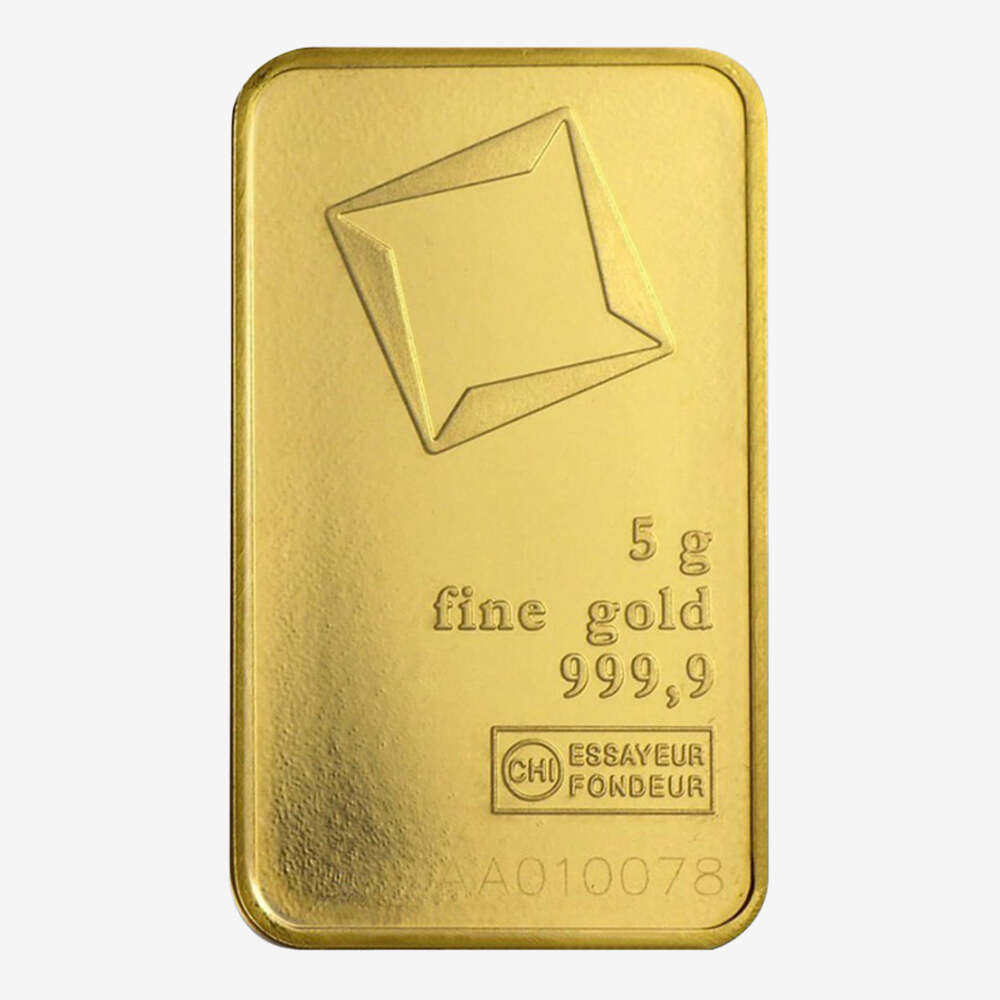
Cast or minted bars come in many weights. The smallest investment bars may weigh 1 g, with popular sizes including 5 g, 10 g, 1 ounce (about 31.1 g), 50 g, 100 g, 250 g, 500 g and 1,000 g (1 kg). Bars generally have a fineness of 999.9. The larger the bar, the lower the percentage premium: large bars cost less per gram than small ones. A 1 kg bar, for example, may cost around 1–2% above the market price, while a 1 g bar may cost 10–15% above it because production costs are disproportionately high. Large investors seeking the lowest premium should therefore choose the largest convenient units. However, a large bar is less flexible: an investor cannot sell just part of a 1 kg bar and must sell it whole. Smaller bars, such as 100 g, are easier to sell in portions but carry a slightly higher initial premium. Coins offer still greater flexibility: holding twenty one-ounce coins instead of one twenty-ounce bar allows a few to be sold while the rest are retained. This flexibility makes coins particularly popular with smaller and medium-sized investors.
Choosing the right form
For a large investment intended to be held for a very long time, large bars of 500 g, 1 kg or more help minimise costs. Investors should be confident, however, that they will not need part of the money early. For greater flexibility or smaller investments, coins or smaller bars are preferable, allowing gradual sales or exchanges without affecting the entire holding. Beginners often choose one-ounce or half-ounce coins as a practical size, with a relatively modest premium and manageable unit value, or 50–100 g bars. Both coins and bars have advantages, so assess your investment size, time horizon and liquidity needs.
Gold's strategic role in an investment portfolio
Many financial advisers recommend including gold in a portfolio to improve overall stability, reduce risk and protect against surprises, rather than to maximise returns. Here are several reasons why gold is considered a strategically useful portfolio component:
Long-term preservation of value.
Over the centuries, gold has repeatedly demonstrated its ability to maintain long-term purchasing power. It therefore acts as insurance against extreme scenarios such as currency devaluation, hyperinflation and systemic crises. Although prices fluctuate over shorter periods, gold generally catches up with monetary expansion and inflation over decades. It gives investors reassurance that their portfolio includes an asset independent of debt and with intrinsic value.
Tolerating volatility and maintaining discipline.
Although gold stabilises a portfolio, its own price is not completely stable and changes daily. Investors must understand that its value can rise or fall over short periods and be psychologically prepared. Discipline is particularly important: do not panic if gold falls over a month or year, or rush to sell out of fear. Gold is a marathon, not a sprint. A sensible strategy uses a long horizon, such as 5–10 years. Historically, it has rewarded patient investors through a positive long-term trend, despite occasional extended stagnation. Hold gold for a clear reason, such as hedging or preserving value, without expecting explosive short-term returns. This helps avoid emotional decisions. Patience and discipline underpin a successful gold portfolio.
Diversification and risk reduction.
Gold's most important portfolio function may be diversification. Its correlation with shares and bonds is very low or negative, especially in crises. When shares fall, gold often rises or holds steady, and vice versa. Including gold can reduce overall portfolio fluctuations because losses in one asset class may be partially offset by gold's gains. Research shows that some gold in an optimally diversified portfolio improves the risk-return relationship, reducing volatility for the same expected return. This is why prominent investors and fund managers, such as Ray Dalio, recommend allocating a portion to precious metals. Gold is especially useful as insurance against systemic risk, which explains its significant place in central bank portfolios.
Rebalancing and tactical use of gold.
Some investors use gold actively, increasing allocations when they anticipate inflation or crises and reducing them during stability. For most, however, a fixed allocation with periodic rebalancing is sufficient. If price movements raise gold's share well above its target, for example from 10% to 15%, part can be sold to take profits and restore 10%. Conversely, if its share falls, more can be bought at a lower price to reach the target. This automatically encourages buying low and selling high, though it is a more advanced tactic. The essential point is to have a strategy and follow it instead of chasing short-term sentiment.
Portfolio allocation.
The appropriate gold allocation depends on an investor's goals and risk tolerance. Common recommendations suggest around 5–10%. More conservative investors who fear inflation or distrust the financial system sometimes hold 15–25%, although such a large allocation can reduce growth potential. Balance matters: gold should not represent 100% of investments unless you expect a complete financial collapse, because excessive concentration sacrifices opportunities elsewhere. A 5–15% allocation is often a compromise that provides meaningful diversification while leaving most returns dependent on shares, property and bonds. The proportion can be reviewed periodically as conditions change.

Summary
Gold's strategic value in a portfolio comes from risk management and stability rather than profit maximisation. It acts like a financial safety cushion: rarely needed day to day, but invaluable in an emergency. An appropriate gold allocation helps portfolios withstand storms and gives investors greater confidence in the future.
Common mistakes when investing in gold
Investing in gold, like any other asset, involves potential mistakes, especially for beginners. What are the most common errors, and what should you avoid to make an investment successful?
Confusing investment gold with jewellery.
Confusing investment gold with jewellery. A fundamental mistake is assuming that any gold item is suitable as an investment. Jewellery carries substantial markups for craftsmanship, design and retail margins, and is subject to VAT, at 21% in Lithuania. Buying a gold ring or chain means investing in gold representing only around 58–75% of its weight, for 585 or 750 fineness, while paying far above the metal's market value. On resale, you generally receive only the scrap gold price, much less than you paid. For investment, buy bullion bars or coins. Buy jewellery for personal enjoyment; it is not an efficient investment.
Buying gold from unreliable sources.
Another common mistake is chasing cheaper offers through informal channels, such as markets, online classified ads or strangers. This risks buying counterfeit or impure gold. Counterfeits include bars of other metals plated with gold and fake coins, which inexperienced buyers may not recognise. Even an attractive price can hide deception, and outright fraud may leave you with neither money nor gold. Always buy from established, reputable dealers who provide documents, certificates and guarantees. It is better to pay slightly more and know you are receiving the real thing.
Failing to verify authenticity.
Even after buying from a good source, purchasers sometimes neglect certificates or verification. Beginners may discard a bar's packaging and certificate, thinking the metal does not need them. This is a mistake: missing certification can raise authenticity questions on resale and lead to lower offers. Some buyers also fail to check hallmarks or product specifications. Always request proof of authenticity and keep certificates and receipts. If in doubt, obtain an independent assessment; instruments can check purity through packaging. Investment gold's value directly depends on its pure gold content, so you must be completely sure it meets the stated specifications.
Investing borrowed money.
The desire to invest can override common sense, leading people to borrow to buy gold. This is risky. Gold does not guarantee quick profits, whereas a loan carries fixed interest costs. If prices fall or stagnate, the investor is left with debt and interest without any return. Pledging gold is also not straightforward: banks do not accept it as collateral, and pawnbroker valuations are low. Invest only your own surplus funds, not borrowed money. First build an emergency reserve, then allocate excess savings to gold to avoid financial trouble if the market moves against you.
Expecting quick, easy profits.
Advertising sometimes presents gold as an asset that always rises, but reality differs. Expecting to become wealthy a month after investing is unrealistic. New investors are often disappointed when prices fail to rise, or fall, over a few months and rush to sell at a loss. This impulsive, short-sighted behaviour conflicts with gold's role as long-term protection. Gold can move in either direction over short periods and has moderate volatility. Treating it as a short-term speculative instrument is a mistake. Take a marathon approach: plan for at least several years, preferably without a fixed end date. Patient holding generally pays off, but getting rich in a week does not work with gold. Avoid excessive short-term expectations.
Investing all savings in gold.
Although gold is reliable, concentrating everything in one asset is never recommended. Some people become so attracted to its security that they convert almost all their savings into it. This is not balanced. Excessive concentration can reduce overall returns and even increase risk. Allocating 100% to gold sacrifices opportunities from rising shares, property rental income or business growth. If gold stagnates or falls for years, the entire portfolio barely grows. Diversification is the answer. Even if you strongly believe in gold, hold only a portion in it; professionals cite 5–25%, depending on risk, and spread the rest across other asset classes. This protects against periods of gold losses when other investments may be profitable. A balanced portfolio always offers better risk management than a single-asset portfolio.
Ignoring the bid-ask spread.
Beginners sometimes assume they can sell gold at any time for its quoted price. In reality, a spread separates the dealer's selling price from its buying price. Without understanding this, you may be disappointed to find newly purchased gold immediately worth around 5% less at the dealer's buyback price. This is normal: dealers earn a margin. Ignoring it and expecting instant profit is a mistake. Before buying, ask about the spread and calculate how far the ounce price must rise to cover transaction costs. With patience this need not be a problem, but understanding it helps you interpret investment performance correctly.
Overpaying for very small or collectible products.
Some beginners are drawn to tiny 1 g bars, miniature coins or colourful commemorative series, assuming gold is gold. Tiny bars, however, carry very high relative premiums, and collectible or numismatic coins cost far more than their gold content. A 1 g bar may cost twice the market value of that gram because manufacturing and distribution are expensive relative to such a small amount. A collectible coin's numismatic value is subjective and may not translate into a higher future sale price. The mistake is not understanding what you are paying for. If your aim is gold investment, choose standard popular products such as 1 oz coins or 10–100 g bars with low premiums, rather than rare issues or miniature bars with a 30% premium. Unless you are interested in numismatics, collectibles should not form a significant part of the investment.
Summary
Gold is a proven asset that has served humanity for thousands of years. Its unique properties and independence from issuers make it attractive to ordinary investors and central banks alike. Investing in gold provides both a financial asset and a share in the history of global financial security. Understand its role, strengths and weaknesses, integrate it thoughtfully into your strategy and remain disciplined. Gold can then become a reliable pillar of financial wellbeing, providing stability and value for future generations.
Start investing
with Gold Account
We recommend applying on your phone - you will need
to use the camera during the process
We use cookies to ensure the proper functioning of the website, for traffic analysis, marketing and content personalization. Necessary cookies are essential for the functioning of our website. These cookies are always active and do not require your consent. You can find more information about cookies in our privacy policy.
Funkcinės tinklapio technologijos
Šioje svetainėje yra naudojamos tam tikros technologijos, kurios būtinos šios svetainės pilnaverčiam funkcionavimui. T.y. būtini (funkciniai) slapukai (angl. "cookies"). Šie slapukai yra automatiškai naudojami.
Statistinės bei analitinės technologijos
Šioje svetainėje yra naudojami analitinių bei statistinių įrankių slapukai (angl. "cookies"). Šie slapukai nėra privalomi. Jų paskirtis yra analizuoti vartotojų lankomumo istoriją, padėti pagerinti svetainės naudojamumą bei patogumą. Analitiniai slapukai, klasifikuojami šioje kategorijoje, yra nepersonalizuoti; iš patikimų partnerių su etiškomis duomenų registravimo praktikomis.
Išorinės technologijos, susijusios su reklama, vartotojų stebėsena
Slapukai, klasifikuojami šioje kategorijoje, apima reklamos agentūrų bei reklamos tinklų siūlomas technologijas. Šie slapukai nėra privalomi. Tai slapukai, kurių pagalba yra kaupiama personalizuota bei asmeninė informacija apie vartotoją; atliekamas duomenų profiliavimas reklamos tikslais.
Reject all
Accept all
Išsaugoti pasirinkimus
Cookie settings
Reject all
Accept all
Customize