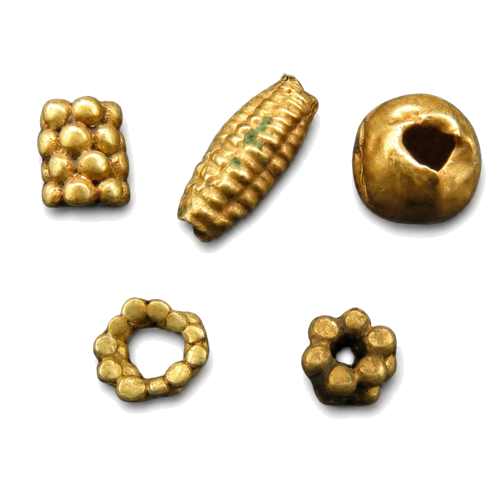

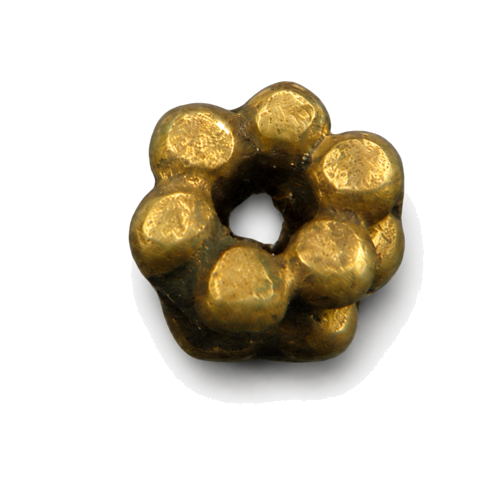
About the item: An authentic set of five Ancient Roman gold decorative beads dating from the 1st century BC to the 1st century AD. These are exceptional pieces of ancient jewelry representing the golden age of the Roman Empire and the pinnacle of goldsmithing mastery. Small yet highly detailed, these beads served as components of luxurious necklaces, bracelets, or other personal adornments, highlighting the owner's social status. Valued for its archaeological and historical significance, this precious metal set in excellent condition possesses a delicate aesthetic along with powerful collectible and investment appeal.
Technical Information:
Height (average): 5 mm
Width (average): 3 mm
Depth (average): 3 mm
Total weight: 529 mg
Origin: Ancient Rome
Period/Era: 1st century BC – 1st century AD
Culture: Classical Roman
Material: Gold Condition: Excellent
Provenance: Formed in the 1990s within a private North American collection (USA); subsequently held by "A&O Gallery" (United Kingdom), from which it was acquired in 2024.
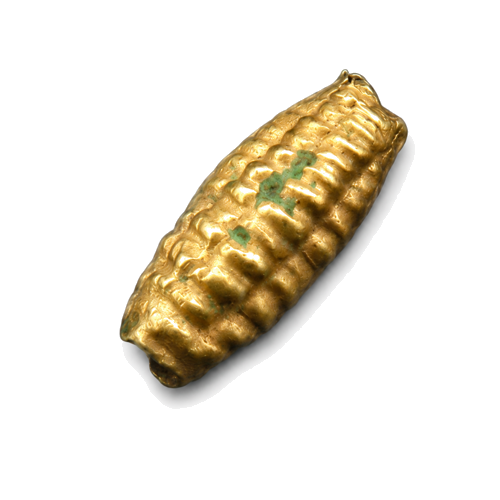
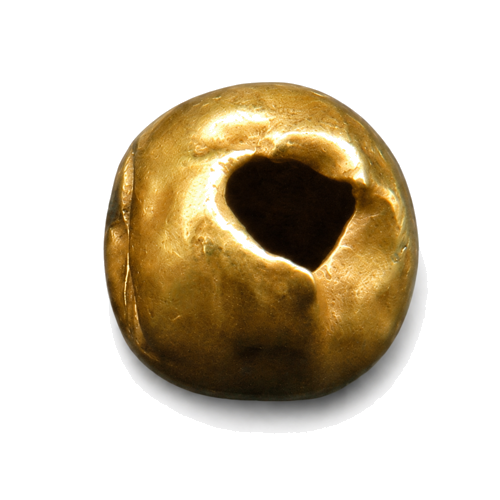
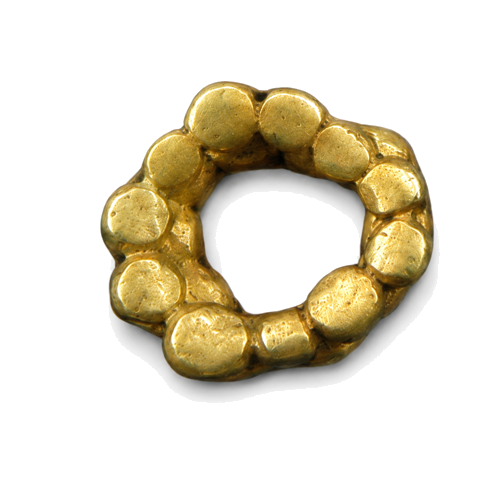
Artistic and Structural Analysis: This set comprises five uniquely shaped gold beads with diverse textures, demonstrating the sophisticated miniature techniques employed by Roman jewelers. Notable among the specimens are elements formed using granulation principles: a cylindrical bead composed of tiny gold spheres, an elongated ribbed spindle-shaped bead, a smooth-surfaced spherical form, and two openwork segments resembling flowers or blossoms. The beads retain the authentic luster and soft hue characteristic of ancient gold. Subtle variations in measurements and the handcrafted relief confirm the individual creation of each object, lending the entire composition vitality and an undeniable stamp of authenticity.
Historical and Geographical Context: The period spanning the 1st century BC to the 1st century AD, capturing the transition from the late Roman Republic to the early Empire (the Pax Romana era), witnessed an unprecedented boom in luxury goods and jewelry. The influx of wealth and precious metals into Rome facilitated the development of highly advanced metalworking technologies, including filigree, soldering, and granulation. Gold beads and necklaces were integral to the daily and ceremonial attire of wealthy Roman women, particularly within the patrician class. These artifacts stand as a living testament to the aesthetic standards, trade networks, and elite culture of the period.
Collectible and Investment Value: The market value of this ancient gold set is defined by the following criteria:
Historical nobility – authentic Ancient Roman gold works represent one of the most coveted and stable archaeological collecting niches.
Superior preservation – the excellent condition without structural deformations allows these elements to be incorporated into contemporary bespoke jewelry or exhibited as a standalone set.
Clear provenance – the documented history through recognized private collections and UK galleries since 1990 ensures absolute legal transparency and enhances the item's valuation.
Market liquidity – miniature ancient gold objects enjoy constant demand at international auctions, and the inclusion of a retail certificate of authenticity provides additional security guarantees.
Crafted over two thousand years ago, these elements of ancient luxury are authentic witnesses to history, merging the timeless value of gold, the elegance of Roman craftsmanship, and solid long-term collectible potential.