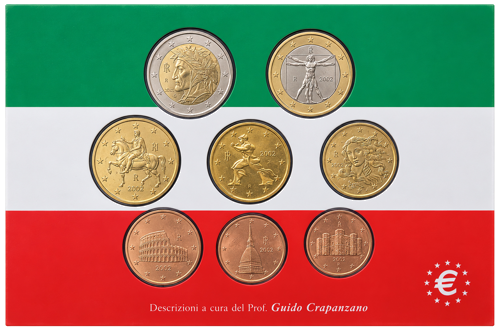
Obverse: The set consists of eight 2002 Italian euro coins ranging from 1 cent to 2 euros. Each denomination features a different famous motif from Italian art, architecture or culture. The 1 cent coin depicts Castel del Monte, the 2 cent coin the Mole Antonelliana in Turin, the 5 cent coin the Colosseum in Rome, the 10 cent coin a detail from Sandro Botticelli's The Birth of Venus, the 20 cent coin Umberto Boccioni's sculpture Unique Forms of Continuity in Space, the 50 cent coin the equestrian statue of Emperor Marcus Aurelius, the €1 coin Leonardo da Vinci's Vitruvian Man, and the €2 coin a portrait of Dante Alighieri created by Raphael. The coins also bear the year 2002, the Italian Republic symbol RI, the Rome Mint mark R and the 12 stars of the European Union.
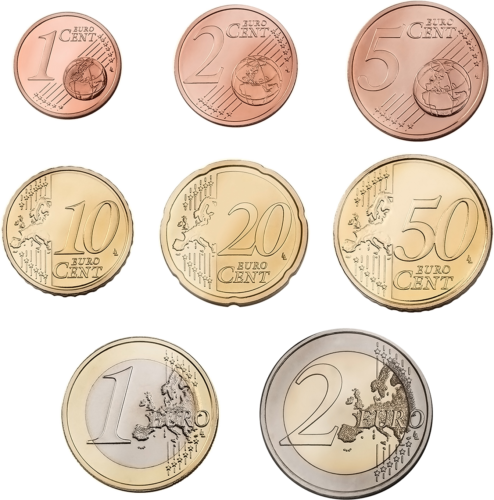
Reverse: The reverse of the coins features the first common European design used at the time, corresponding to each euro denomination. The 1, 2 and 5 cent coins depict Europe in relation to the world, while the 10, 20 and 50 cent and €1 and €2 coins depict the European Union member states of the time. The common sides of the coins were designed by Luc Luycx of the Royal Mint of Belgium.
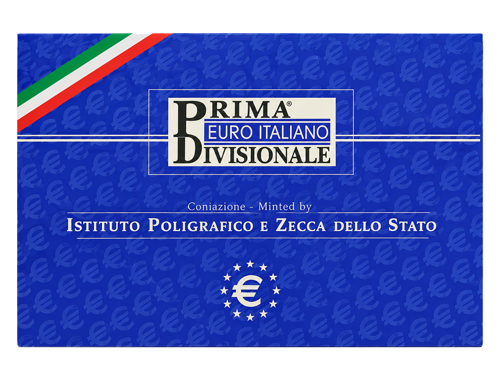
About the coins: The 2002 coins are the first Italian euro coins issued for circulation. Euro banknotes and coins officially entered circulation in Italy on 1 January 2002, replacing the Italian lira. Italy selected a different national motif for each of the eight euro denominations, representing some of the country's most famous works of art and architecture. The designs were initially evaluated by a national technical and artistic committee and were later presented to the public on RAI UNO television. The set was struck by the Italian State Mint, Istituto Poligrafico e Zecca dello Stato, and represents the first series of Italian euro coins, bringing together more than two thousand years of Italian art, architecture and cultural history.